What We Look for in the First 10 Minutes of a Website Review
The Foundations of Website Performance

Many business owners have difficulty evaluating their own website. After all, you've likely spent months (or maybe even years) looking at the same pages, updating content, making changes, and using the site as part of your day-to-day business. What feels familiar to you may not feel clear to a first-time visitor.
That's one of the reasons website reviews can be so valuable.
When we review a website at NEKO, we're not just looking at design. We're evaluating the entire digital experience from the perspective of both a potential customer and a marketing strategist.
- Can visitors quickly understand what the business does?
- Is the website helping move people toward a decision?
- Does the structure support search visibility?
- Are trust signals present?
- Is the website connected to the larger marketing ecosystem?
These are the types of questions we begin asking almost immediately.
One of the most surprising things we tell business owners is that it doesn't take very long to identify many of the strengths and weaknesses of a website. In fact, within the first 10 minutes of a review, we can often spot opportunities that impact visibility, user experience, conversion rates, and overall marketing effectiveness.
That doesn't mean a full website review is complete in 10 minutes, but it does mean there are key indicators that tell us whether a website is helping a business grow—or potentially holding it back.
The goal isn't to criticize a website. The goal is to understand how effectively it's supporting the business behind it.
Because a website doesn't exist in a vacuum.
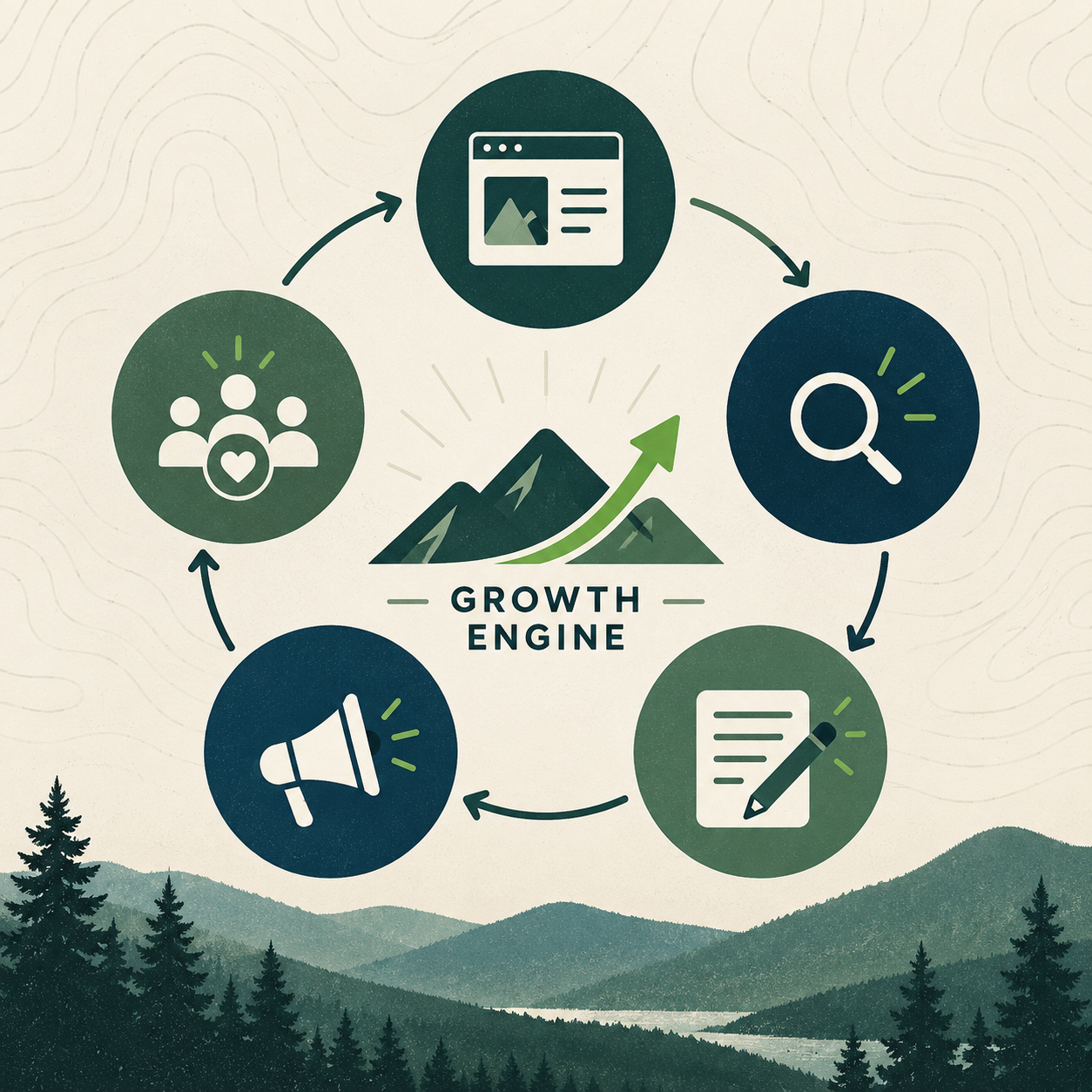
It's connected to your SEO strategy, business listings, online reviews, social media presence, advertising efforts, analytics, and customer experience.
When those systems work together, marketing becomes easier to measure and easier to improve.
When they don't, opportunities can be lost without anyone realizing it.
So what exactly are we looking for when we open a website for the first time?
Let's walk through the same review process we use every day.
Here’s a closer look at what we evaluate first—and what business owners should be paying attention to themselves.
First Impressions Matter Fast
Most visitors decide how they feel about a website within seconds.
That means your homepage has one very important job:
Clearly communicate who you are, what you do, and what visitors should do next.
If someone lands on your website and immediately feels confused, overwhelmed, or unsure where to go, they usually leave.
One of the most common issues we see is businesses trying to say too much all at once.
Strong websites simplify information. Weak websites overload it.
Before we evaluate traffic, rankings, or conversion opportunities, we want to understand how information is organized. Website structure often determines how easily visitors can navigate the site and how effectively search engines understand the content.
We Look at Website Structure First
One of the first things we evaluate is how the website is organized.
A strong website is built in clear, intentional sections that guide visitors naturally through information.
That usually includes:
- A clear headline
- Supporting messaging
- Service sections
- Trust-building content
- Calls-to-action
- Contact information
- Frequently asked questions
Every section should have a purpose.
If visitors have to “hunt” for information, the website is working against them.
Once we've evaluated structure, our attention shifts to communication. Even the best-designed website can struggle if visitors can't immediately understand what a business does or why they should care.
Clear Messaging vs. Confusing Messaging
This is one of the biggest differences between a high-performing website and an underperforming one.
Many websites talk "at" visitors instead of speaking directly to their needs.
When reviewing messaging, we ask:
- Is it immediately clear what this business does?
- Does the messaging focus on the customer?
- Is the language simple and easy to understand?
- Is there a clear next step?
Clarity builds confidence. And confidence drives action.
User Experience Is More Than Design
Good design matters, but design alone doesn’t create results.
We evaluate how easy the website is to actually use.
That includes:
- Mobile responsiveness
- Navigation
- Page speed
- Readability
- Layout spacing
- Button placement
- Contact accessibility
Most website visitors today are viewing websites from their phones first.
If a website feels difficult to navigate on mobile, people often leave before ever reaching out.
Today's consumers are more informed than ever. Before contacting a business, many people actively look for evidence that the company is credible, experienced, and trustworthy.
We Review Trust Signals
Trust is one of the most important parts of any website.
Business owners sometimes forget that visitors are asking themselves: “Can I trust this company?”
Strong trust signals include:
- Testimonials
- Reviews
- Team photos
- Real project examples
- Clear contact information
- Updated content
- Professional branding
Websites that feel outdated or incomplete create hesitation (even if the business itself is excellent).
A strong website is important, but visibility matters just as much. If customers can't find your business online, even the best website won't generate the results you're looking for.
SEO, Listings, and Search Visibility Matter Too
A website doesn’t operate in isolation anymore.
When we review a business’s online presence, we’re also looking at:
- Search visibility
- Directory listings
- Google Business Profile consistency
- SEO structure
- Social media presence
- FAQ content
- Search-friendly formatting
If the information about your business is inconsistent across platforms, it creates confusion for both search engines and potential customers.
The Growing Importance of FAQs and AEO
Search behavior is changing quickly.
People aren’t just typing short keywords into search engines anymore—they’re asking full questions through Google and AI-powered search tools.
That’s why FAQ content has become increasingly important.
Well-structured FAQ sections help:
- Improve SEO visibility
- Support AEO (Answer Engine Optimization)
- Build trust with visitors
- Answer objections early
- Improve user experience
Clear answers create stronger visibility online.
Common Website Mistakes We See
Some of the most common issues we identify during reviews include:
- Unclear messaging
- Outdated layouts
- Slow mobile performance
- No clear calls to action
- Missing trust signals
- Overcrowded homepages
- Weak service descriptions
- Poor audience targeting
- No analytics tracking
- Inconsistent branding
The good news? Most of these problems are fixable.
And often, small strategic changes make a bigger difference than complete overhauls.
One of the biggest misconceptions we encounter is that website reviews are primarily about design. In reality, design is only one piece of a much larger picture. Our goal is to understand how all of the moving parts work together to support business growth.
A Website Should Support Growth
A strong website should do more than look professional.
It should:
- Build trust
- Create clarity
- Support marketing efforts
- Generate opportunities
- Help visitors take action
That’s why website reviews are about more than design; they’re about understanding how all the pieces work together.
The businesses seeing the strongest results online usually aren’t doing one thing perfectly.
They’re doing many small things intentionally.
Frequently Asked Questions