The Small Business Digital Marketing Checklist: Website, Search, Social, Reviews, and Follow-Up
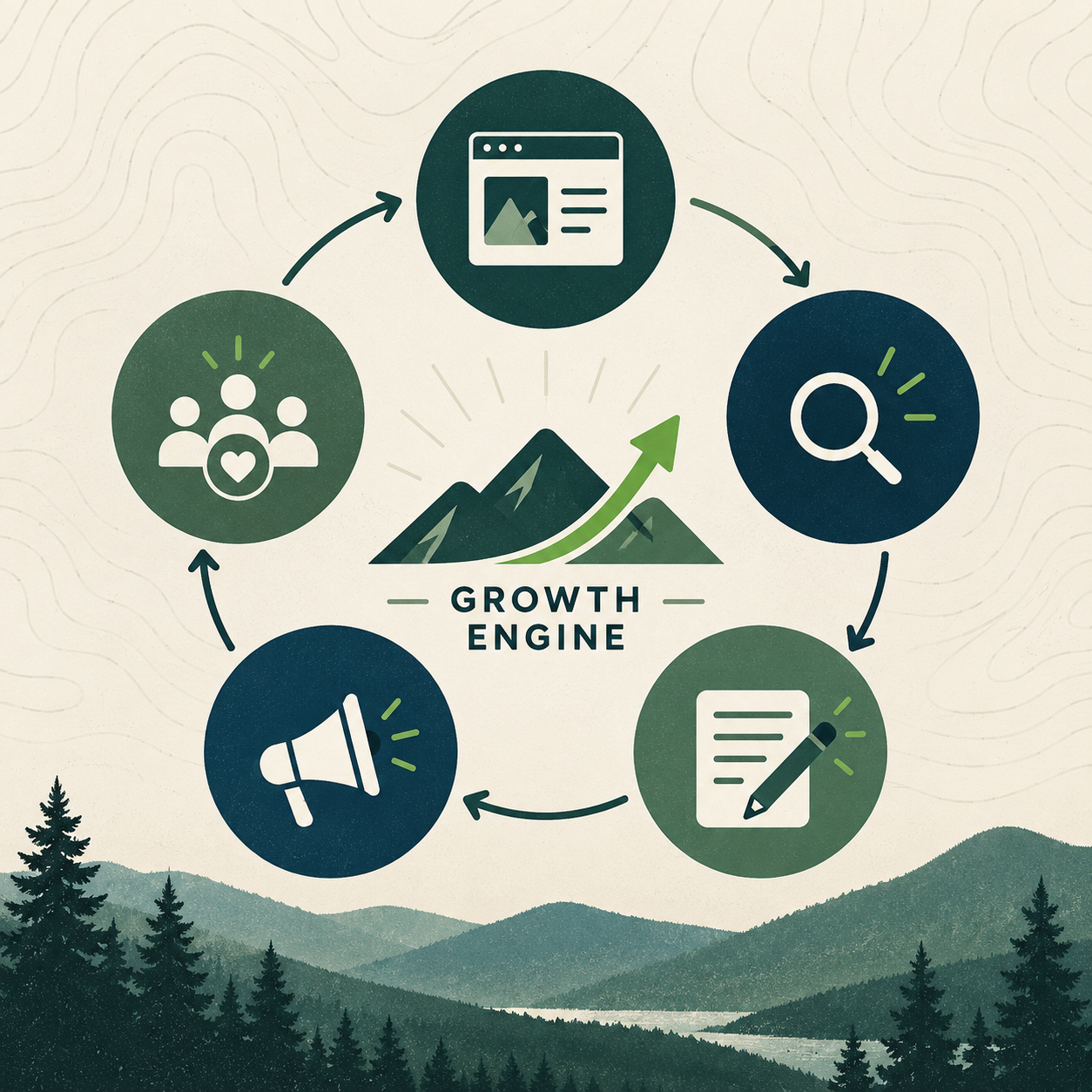
Your Marketing Works Better When Everything Is Connected
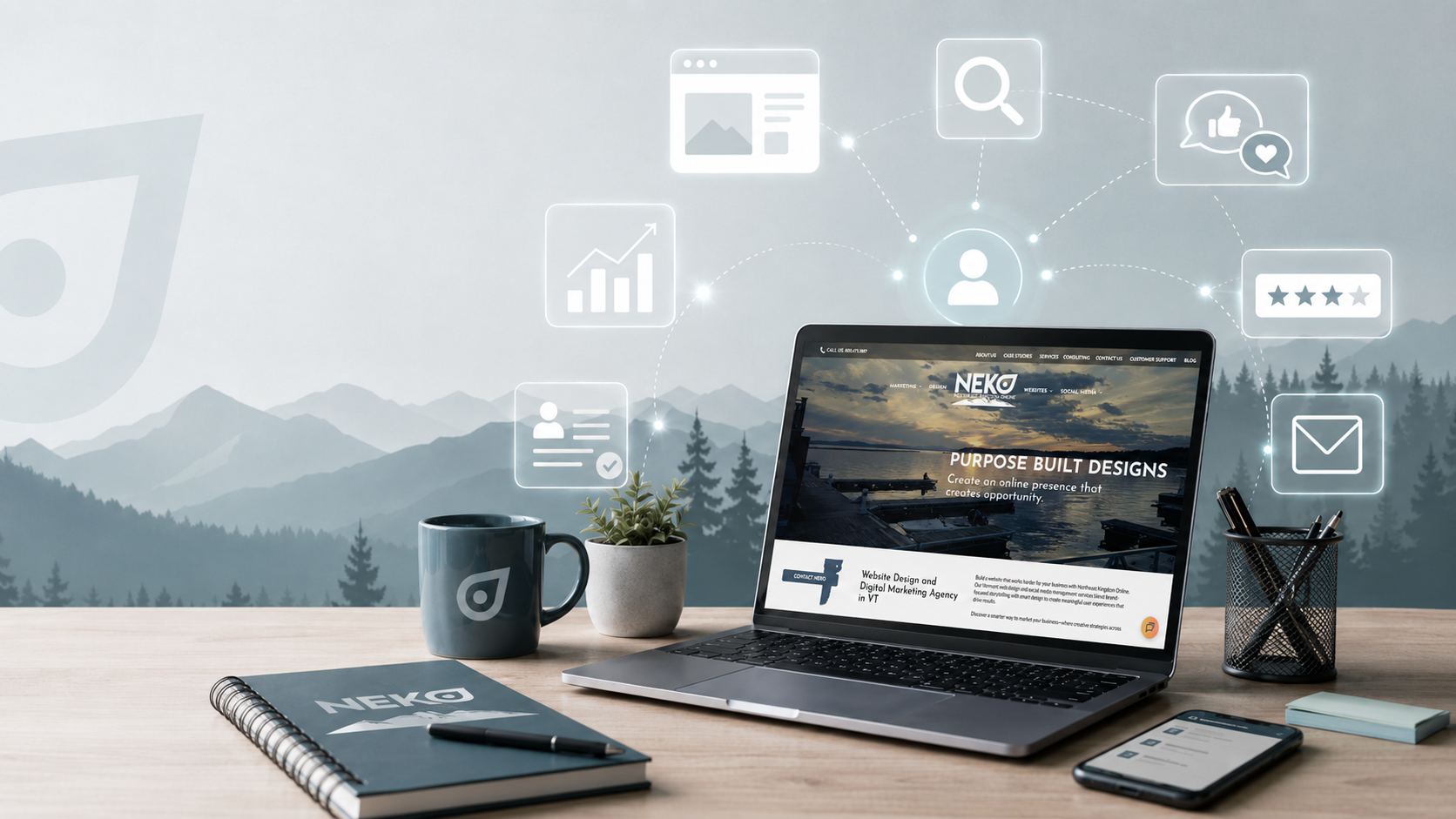
Digital marketing can feel overwhelming because it is not just one thing.
It is your website. Your search presence. Your social media. Your reviews. Your Google Business Profile. Your lead forms. Your follow-up process. Your analytics. Your content. Your reputation. Your ability to understand what is working and what needs attention next.
For a small business owner, that is a lot to keep track of — and it is even harder when those pieces are not connected.
You may have a website, but it may not be clear enough for visitors to know what to do next. You may be posting on social media, but not sending people anywhere useful. You may be getting website traffic, but not knowing where your leads are coming from. You may be collecting reviews, but not using them to build trust. You may be getting inquiries, but losing track of follow-up.
That does not mean your marketing is failing. It may mean your marketing system needs a closer look, though.
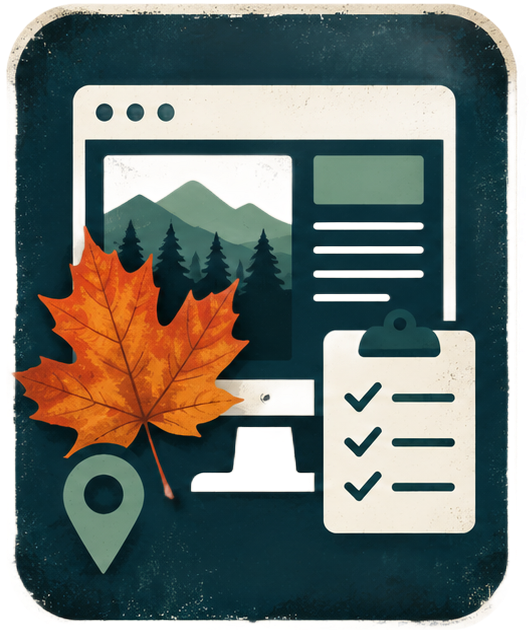
This small business digital marketing checklist is designed to help you step back and review the pieces that matter most: your website, search visibility, social presence, reviews, lead tracking, follow-up, and measurement.
The goal is not to make marketing feel more complicated; the goal is to help you see what is working, what is missing, and where to start.
Your Marketing Works Better When Everything Is Connected
A strong digital marketing system should not feel like a collection of separate tasks.
Your website should support your search visibility. Your search visibility should help people find useful information. Your social media should guide people toward your website, services, or next step. Your reviews should help build trust. Your contact forms should capture leads. Your follow-up process should help move those leads into real conversations.
When those pieces work together, your marketing becomes easier to understand and easier to improve.
When they are disconnected, it becomes harder to know what is actually helping your business grow.
That is why a checklist can be helpful. It gives you a way to look at your marketing with fresh eyes and ask better questions.
Is your website clear?
Your website is often the center of your digital marketing system.
It's where people go when they want to learn more about your business, compare options, understand your services, or decide whether to reach out. A good website should do more than look professional. It should make the next step obvious.
When someone lands on your site, they should quickly understand what you do, who you help, where you work, and why your business is the right fit. They should not have to dig through vague language, outdated pages, confusing navigation, or hidden contact information.
Website clarity matters because attention is limited. If someone cannot understand your message, find the service they need, or figure out how to contact you, they may leave before you ever know they were interested.
For small businesses, especially those competing locally in Vermont or the Northeast Kingdom, clarity can be the difference between a visitor and a lead.
A clear website should answer the questions people are already asking. It should explain your services in plain language. It should include strong calls to action. It should make your location or service area easy to understand. It should give people a reason to trust you before they reach out.
A good place to start is looking at your homepage and asking: If someone knew nothing about our business, would they understand what we offer in the first few seconds?
If the answer is no, your website may need stronger messaging before it needs more traffic.
Can people find you in a search?
A clear website is important, but people also need to be able to find it.
Search visibility helps your business show up when people are looking for the products, services, or answers you provide. That may include traditional search terms, such as “website design in Northeast Kingdom VT,” “SEO services in Northern Vermont,” or “Vermont social media marketing.” It may also include question-based searches, like “How do I know if my website is working?” or “What should a small business do to improve local search?”
Search is changing, but the foundation is still the same: Your website needs to be useful, clear, and relevant.
Strong service pages matter. Helpful blog content matters. Local context matters. FAQs matter. Your Google Business Profile matters. Directory listings matter. Reviews matter. Technical website health matters.
Search visibility is not only about ranking for one keyword. It is about creating a stronger online presence so people can find accurate, helpful information about your business when they need it.
For a small business, this may mean confirming your service pages are specific enough, your location is clear, your Google Business Profile is up-to-date, and your website content answers real customer questions.
It also means thinking beyond simple keywords.
People are not just searching anymore. They are asking. Your content should be ready to answer.
Are your service pages doing enough?
Many small business websites have service pages that are too thin.
They name the service, add a short paragraph, and then ask people to contact the business. That may be better than nothing, but it often does not give people enough information to feel confident taking the next step.
A strong service page should explain what the service is, who it is for, what problem it solves, what makes your approach different, and what someone can expect if they reach out.
For example, a page about website design should not only say that your business builds websites. It should explain what makes a website effective, why clarity matters, how the site supports leads, and what business owners should consider before starting a project.
A page about social media marketing should not only say that you create posts. It should explain how social content supports visibility, trust, education, and relationship-building.
A page about SEO should not only mention rankings. It should explain how search visibility works, why local context matters, and how content supports long-term visibility.
Service pages should help people understand the value behind the service. They should make the decision process easier, not more confusing.
Are your reviews helping build trust?
Reviews are one of the strongest trust signals a small business has.
Before someone contacts you, there is a good chance they will look for signs that customers have had a positive experience. Reviews help provide that reassurance. They show that your business is active, trusted, and capable of delivering on your services.
But reviews are not just something to collect and forget about.
They should be part of your larger marketing system.
Your reviews can support your Google Business Profile. They can strengthen local search visibility. They can provide language that reflects what customers actually value about your business. They can be used as social proof on your website, in social media content, and in sales conversations.
If your reviews are outdated, inconsistent, hard to find, or not being used anywhere, you may be missing an opportunity to build trust before someone reaches out.
A good review strategy does not have to be complicated. It starts with asking satisfied customers, making the review process easy, responding when appropriate, and using strong feedback throughout your marketing.
Trust is not built in one place. Reviews help support it across many places.
Is your social content pointing people somewhere useful?
Social media can help your business stay visible, educate your audience, and build relationships over time. But social content works best when it has a purpose.
Posting consistently is helpful, but consistency alone is not the whole strategy.
Your social content should help people understand your business. It should answer common questions. It should highlight your services, process, values, team, community, and expertise. It should give people a reason to take the next step when they are ready.
That next step does not always have to be a sale. Sometimes it is reading a blog, visiting a service page, learning more about your process, checking your website, or starting a conversation.
The important question is whether your social content connects to the rest of your marketing.
If you are posting helpful tips but never guiding people back to your website, you may be missing traffic opportunities. If you are sharing blogs but not making the value clear, people may not click. If your social media says one thing and your website says another, the experience can feel disconnected.
Social media should not exist on an island; it should support the larger system.
Do you know where your leads come from?
Getting leads is important. Understanding where they came from is even better.
If someone contacts your business, do you know how they found you? Did they come from Google? A social media post? A paid ad? A blog article? Your Google Business Profile? A referral? A directory listing? A review?
Without that information, marketing can start to feel like guesswork.
You may know that people are contacting you, but not which efforts are driving those inquiries. You may be investing time in social media, SEO, advertising, or website updates without knowing what is creating meaningful action.
Lead tracking helps connect the dots.
It gives you a clearer picture of which parts of your marketing are helping people take the next step. It also helps you make better decisions about where to spend time, energy, and budget.
This is where tools like CRM systems, website forms, analytics, and tracking links can become valuable. They help move your marketing from “we think this is working” to “we have a clearer picture of what is happening.”
For small businesses, that clarity matters.
Do you have a follow-up system?
Getting a lead is only the first step.
What happens after someone contacts you matters just as much.
Many businesses lose opportunities not because they failed to generate interest, but because the follow-up process was unclear. A form submission went to the wrong inbox. A phone call was not logged. A message was answered late. A potential customer needed a second touchpoint, but no reminder was set. A lead source was forgotten.
These things happen because small businesses are busy, but they also happen when no system is in place.
A follow-up system helps ensure inquiries are seen, organized, and responded to in a timely way. It helps your business know who reached out, what they asked about, where the conversation stands, and what needs to happen next.
A CRM, or customer relationship management system, can support this process by tabulating lead information and follow-up activity in one place. A full-function CRM is included in all Northeast Kingdom Online marketing plans because websites should do more than collect inquiries; they should help businesses capture, track, and follow up with leads.
Follow-up is part of the customer experience.
When it is clear and consistent, it builds trust.
Are you measuring the right things?
Marketing data can be helpful, but only if you know what you are looking at.
It is easy to get distracted by surface-level numbers. Likes, impressions, and reach can be useful, but they do not always tell the full story. A post may get attention without generating action. A website may get traffic without creating leads. A campaign may look busy without supporting the business goal.
The right metrics depend on what you are trying to accomplish.
If your goal is:
Awareness
Reach and Impressions matter.
Engagement
Comments, Shares, Saves, and Clicks may matter more.
Lead Generation
Form Submissions, Phone Calls, Email Inquiries, and CRM activity become more important.
Search Growth
Keyword Movement, Website Traffic, Google Business Profile views, and Organic Inquiries should be reviewed.
The point is not to track everything just for the sake of tracking.
The point is to understand whether your marketing is helping people find you, trust you, contact you, and move forward.
Good reporting should help you make decisions. It should show what is working, what needs attention, and what should happen next.
Is your marketing helping people take the next step?
At its core, digital marketing should help people move from awareness to action.
Someone may first discover your business through a search. They may see your social content later. They may check your reviews. They may visit your website. They may read a blog. They may compare your services. They may finally fill out a form or make a call.
That journey is rarely a straight line.
That is why your marketing pieces need to work together.
Your website should be clear. Your search presence should make you easier to find. Your social media should build familiarity. Your reviews should support trust. Your lead tracking should show what is happening. Your follow-up system should help keep opportunities from slipping away. Your reporting should help you make better decisions.
When one of those pieces is missing, the whole system can feel weaker.
When they work together, your marketing becomes more useful, more measurable, and more connected.
Turning the checklist into action
A checklist is only helpful if it leads to action.
As you review your marketing, you may find small updates that are easy to make.
- Maybe your contact button needs to be clearer?
- Maybe your Google Business Profile needs fresh photos?
- Maybe your service pages need stronger explanations?
- Maybe your reviews need to be featured more prominently?
- Maybe your forms need better tracking?
- Maybe your follow-up process needs a more organized system?
You may also find that your marketing feels more disconnected than you realized, and that is okay.
The goal is not to fix everything at once. The goal is to identify where the biggest gaps are and decide where to start.
For some businesses, that starting point is website clarity. For others, it is search visibility. For others, it is lead tracking, follow-up, or reporting.
The right starting point depends on your business, your goals, and what is currently getting in the way.
Download the checklist and review your own marketing system
This article is meant to give you the big picture, but the next step is to review your own marketing piece by piece.
That is why we created a downloadable version of this small business digital marketing checklist. It will help you look at your website, search presence, social media, reviews, lead tracking, follow-up process, and reporting in a more organized way.
Use it as a starting point.
You do not need to have every answer right away. You need a clearer picture of what is working, what is missing, and what may need attention next.
Frequently Asked Questions
What should be included in a small business digital marketing checklist?
A small business digital marketing checklist should include the core pieces that help people find, understand, trust, and contact your business. This usually includes website clarity, search visibility, service pages, Google Business Profile, social media, reviews, lead tracking, follow-up, and analytics.
Why is website clarity important for small business marketing?
Website clarity is important because visitors need to quickly understand what your business does, who you help, where you work, and how to take the next step. If your website is confusing, outdated, or unclear, people may leave before contacting you.
How does search visibility support small business growth?
Search visibility helps people find your business when they are looking for your services online. Strong search visibility can include optimized service pages, helpful blog content, local keywords, FAQs, Google Business Profile updates, reviews, and accurate directory listings.
Why do reviews matter in digital marketing?
Reviews help build trust before someone contacts your business. They can support local search visibility, strengthen your reputation, and give potential customers confidence that others have had a positive experience with your business.
How can social media support a small business website?
Social media can support a small business website by introducing helpful topics, building familiarity, promoting blog content, highlighting services, and guiding people toward useful next steps. Social media works best when it connects back to the larger marketing system.
Why is lead tracking important?
Lead tracking helps businesses understand where inquiries are coming from and which marketing efforts are creating action. Without lead tracking, it can be difficult to know whether website updates, social media, SEO, ads, or other efforts are actually producing opportunities.
What is a follow-up system?
A follow-up system is the process a business uses to manage inquiries after someone reaches out. This may include contact forms, CRM tools, reminders, notes, email responses, call tracking, and clear next steps. A strong follow-up system helps prevent missed opportunities.
How do I know if my digital marketing is working?
Your digital marketing is working when it helps the right people find your business, understand what you offer, trust your expertise, and take meaningful action. The best metrics depend on your goals, but may include website traffic, search visibility, form submissions, phone calls, lead sources, engagement, and customer inquiries.