Why Your Google Business Profile Matters More Than Ever
How Your Google Business Profile Builds Visibility and Trust
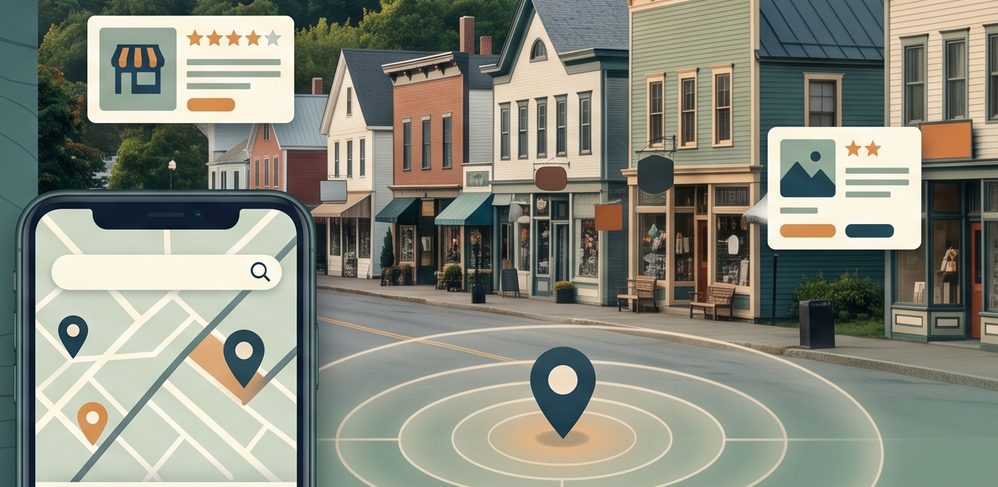
A customer does not always visit your website before deciding whether to contact your business.
They may search for a nearby service, compare businesses on Google Maps, check your hours, read reviews, browse photos, or tap the call button directly from the search results. In many cases, that decision is made before the customer reaches your homepage.
That makes your Google Business Profile more than an online listing. It is often the first meaningful interaction someone has with your business.
A complete, accurate, and actively managed profile can help customers understand what you offer, determine whether you serve their needs, and feel confident taking the next step. An incomplete or outdated profile can have the opposite effect, even when your website and services are excellent.
At NEKO, we view the Google Business Profile as one part of a connected local marketing system. It should work with your website, reviews, local listings, content, and SEO strategy to help the right customers find and choose your business.
Your Google Business Profile Is the New Front Door of Your Business
The traditional front door of a local business is no longer always the first point of contact.
Today, that front door may be a Google Maps result showing your rating, hours, phone number, location, photos, and website. Before customers visit your physical location or call your team, they are often evaluating the information presented in the search results.
Google Business Profiles can appear when people search for a specific company or look for nearby products and services through Google Search and Maps. Google itself recommends keeping profile information complete and accurate so customers can find and learn more about a business.
For the customer, the experience is immediate. They want to know:
Are you open? Do you provide the service they need? Are you close enough? Do other customers trust you? How can they call, visit, or learn more?
Your profile should answer those questions without creating confusion.
Local Search Has Become More Immediate
Local searches are often connected to a real and immediate need.
Someone searching for “website designer near me,” “restaurant open now,” or “plumber in St. Johnsbury” is not casually browsing a broad subject. They may be comparing options and preparing to take action.
Map-based results make that comparison easier. Customers can evaluate several businesses at once based on proximity, profile information, reviews, photos, and availability.
This behavior gives local businesses an important opportunity. You do not need to be a nationally recognized company to appear relevant. You need to give both Google and potential customers clear information about what you do, where you operate, and why your business is a strong choice.
That clarity begins with a verified and carefully maintained Business Profile.
Why First Impressions Matter in Google Search
Customers may form an opinion about your business in seconds.
A profile with current hours, professional photographs, recent reviews, service offerings, and a clear business description suggests that the company is active and attentive. A profile with incorrect information or unanswered reviews may raise concerns before the customer ever speaks with you.
Customers may reasonably wonder whether other details are also outdated. They may hesitate to drive to the location, submit an inquiry, or schedule an appointment.
Your profile does not need to be filled with promotional language. It needs to be useful.
A strong first impression comes from accurate information, clear presentation, and evidence that the business is actively serving customers.
How a Google Business Profile Supports Local Visibility
Your Google Business Profile helps Google understand the relationship between your business and a local search.
Google explains that local results are primarily based on relevance, distance, and prominence.
- Relevance refers to how well a profile matches the search.
- Distance considers the relationship between the customer’s location and the business.
- Prominence reflects how established and well-known the business appears.
You cannot control where every customer is located, but you can improve the information Google uses to evaluate relevance and prominence.
Your primary category should accurately describe the main business. Your services, description, hours, website, address, and service area should be complete. Your reviews, links, articles, directories, and overall web presence can also contribute to how established the business appears. Google notes that review count and positive ratings may support local ranking, while normal website SEO practices also remain relevant.
This is why profile optimization should not be separated from website SEO. The two should reinforce each other.
Your Profile and Website Should Tell the Same Story
A Google Business Profile can introduce the business, but the website provides the depth customers need to make a confident decision.
The profile may tell someone that you provide website design. Your website should explain the process, who you work with, what makes your approach different, and how to request a consultation.
The information on both platforms should agree. Your business name, phone number, address or service area, hours, and primary services should be consistent.
When a profile lists one phone number, and the website lists another, customers may not know which one to use. Conflicting hours can create an even larger problem when someone is planning a visit.
NEKO’s approach connects Google Business Profile support with local SEO, listings, website optimization, content, and answer engine optimization. The goal is not simply to appear somewhere in the results. It is to be found when a relevant customer is searching and to provide a clear path toward action.
Reviews Help Customers Decide Whether to Trust You
Reviews are one of the most influential parts of a Business Profile because they provide information from people who have already interacted with the company.
A potential customer may look beyond the overall rating. They may read recent reviews, search for mentions of a particular service, or observe how the business responds when a customer has a concern.
A steady review process can help your business build a more complete public reputation. Ask satisfied customers for honest feedback at a natural point in the relationship, such as after a completed project, successful appointment, or resolved support request.
Respond to reviews thoughtfully. Thank customers for positive feedback and address negative comments calmly without disclosing private information.
The purpose is not to make the profile look perfect; It is to demonstrate that the business listens, responds, and cares about the customer experience.
Photos Make the Business Feel More Familiar
Photos help customers understand what to expect.
A restaurant can show its dining space and current menu items. A contractor can feature completed projects. A retailer can show products and the store entrance. A professional-service company might introduce its team, office, or working process.
Use clear, recent photographs rather than relying entirely on stock imagery. Customers are often looking for confirmation that the business is active and that the profile represents a real company.
Photos are especially important when people need to recognize a location. Images of the building, entrance, signage, parking area, or reception space can make an in-person visit easier.
Your profile should evolve as the business does. New staff, updated facilities, seasonal products, and recent work are all reasons to refresh your visual content.
Service-Area Businesses Need Strong Profiles Too
A business does not need a storefront to benefit from a Google Business Profile.
Contractors, consultants, cleaners, landscapers, mobile service providers, and other companies that travel to customers can use a service-area profile when eligible.
The profile should accurately represent how the business operates. Do not create the impression that customers can visit an address when there is no staffed location available to receive them.
Your website should support the profile by clearly explaining where services are available. Avoid creating an excessive number of nearly identical town pages. Instead, publish useful service-area information that helps customers understand availability, travel, local experience, and the way services are delivered.
A Business Profile Is Not a Set-It-and-Forget-It Tool
Creating and verifying the profile is only the beginning.
Business details change. Hours shift during holidays. Services expand. Phone numbers are updated. Employees change. Customers upload new photos and suggest edits.
Google may also receive information from public sources or user reports and apply suggested changes to a profile. Business owners should therefore review their information regularly rather than assuming it will remain unchanged.
NEKO recommends checking your profile at least once a month and immediately whenever an important business detail changes. Businesses with frequent events, seasonal hours, or changing availability may need to review it weekly during busy periods.
The most important principle is simple: update the profile when the information changes, not after a customer points out the mistake.
What Should You Keep Updated?
The most important information is whatever customers use to make a decision.
Review your business name, primary category, phone number, website, address or service area, hours, and services. Confirm that links work and lead to the most appropriate pages.
Seasonal businesses should update special hours and availability before customer demand begins. Businesses with appointments or reservations should test their booking links. Retailers and restaurants should make sure current products, menus, and ordering information are easy to find.
Your profile description should clearly explain what the business does without keyword stuffing or exaggerated claims. Categories and services should reflect what you actually provide.
Accuracy is more valuable than trying to include every possible search phrase.
Use Profile Performance to Understand Customer Behavior
A verified Google Business Profile provides performance information that can help you understand how customers discover and interact with your listing.
Depending on the business and available features, this may include searches, views, calls, website clicks, messages, bookings, or direction requests. Google describes this reporting as a way to understand how people find a profile through Search and Maps.
Reviewing this information can reveal useful patterns.
An increase in direction requests may signal stronger local awareness. Website clicks without inquiries may indicate that service pages or calls to action need improvement. Frequent calls about hours or availability may mean the profile is missing information.
The profile’s data should be evaluated alongside website analytics, form submissions, bookings, and actual sales. The goal is not simply to produce more profile views. It is to generate meaningful customer activity.
Avoid Common Google Business Profile Mistakes
One of the most common problems is inconsistency. The profile, website, directories, and social accounts should not present conflicting contact details.
Another mistake is placing unnecessary keywords in the official business name. Your profile should use the company name used in the real world, not a modified name created only for search rankings.
Businesses should also avoid choosing unrelated categories, publishing misleading addresses, or creating duplicate profiles for the same location.
Ignoring reviews can also weaken the customer experience. Even a short, professional response shows that someone is paying attention.
Finally, do not treat profile activity as a substitute for a strong website. The profile and website have different roles, and the most effective strategy allows them to work together.
Make Your Google Business Profile Work Harder for Your Business
Your Google Business Profile may be the first place a customer evaluates your company, even when your website is the center of your broader marketing strategy.
Keeping the profile accurate, active, and connected to the rest of your online presence can improve visibility, strengthen trust, and help more customers take the next step.
NEKO helps Vermont businesses connect Google Business Profile management with local SEO, website optimization, listings, reviews, content, and measurable growth strategies.
Contact Northeast Kingdom Online to strengthen your local search presence and make it easier for the right customers to find you.
Google Business Profile FAQs
What is a Google Business Profile, and why do I need one?
A Google Business Profile is a listing that allows an eligible business to manage how its information appears across Google Search and Google Maps.
It can display details such as your business name, category, location or service area, hours, phone number, website, photos, services, and customer reviews.
You need one because customers may encounter the profile before visiting your website. A complete profile helps them understand your business and provides direct ways to call, visit, request directions, or continue researching.
How does my Google Business Profile affect my SEO?
Your Google Business Profile primarily supports local SEO.
Google uses profile and web-based information to evaluate how relevant a business may be to a local search. Complete details can help Google understand your services, while reviews, directories, links, website authority, and other signals may support prominence.
A profile does not replace website SEO. Strong local visibility comes from connecting the profile with a useful website, consistent listings, relevant content, customer reviews, and accurate business information.
How often should I update my Google Business Profile?
Update your profile whenever important information changes and review it at least once a month for accuracy.
Seasonal businesses or companies with changing events, inventory, hours, or availability may benefit from more frequent reviews. During busy periods, a weekly check can help prevent outdated information from affecting customers.
Is a Google Business Profile free?
Creating and managing an eligible Google Business Profile does not require a subscription fee. However, businesses may choose to invest in professional management, photography, local SEO, content, or paid advertising to improve the broader customer experience and marketing strategy.
Can I have a Google Business Profile without a storefront?
Eligible service-area businesses may create profiles even when customers do not visit a public storefront.
The profile must accurately represent how the business operates. Service areas should reflect the locations you genuinely serve, and a private or unstaffed address should not be presented as a customer-facing location.
Do Google reviews help local SEO?
Reviews can support local prominence and influence customer decisions. Google states that review count and positive ratings may contribute to local ranking.
Reviews should be genuine and acquired consistently. Businesses should never purchase reviews or offer incentives that violate platform policies.
What should I include in my Google Business Profile?
Include an accurate business name, category, location or service area, hours, phone number, website, services, description, and current photos.
The profile should give customers enough information to understand what you do and take the next step without encountering conflicting details.
How can I tell whether my profile is working?
Review your profile’s performance information along with real business outcomes.
Look at website clicks, calls, direction requests, bookings, form submissions, and customer inquiries. The profile is working when it helps qualified customers find the business and complete a meaningful action.