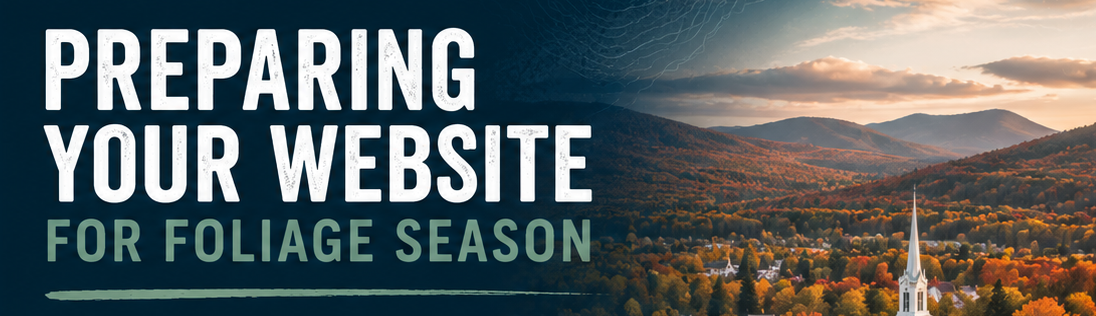
Preparing Your Website for Foliage Season
How Vermont Businesses Can Turn Foliage Season Into Leads
Every fall, Vermont’s changing landscape attracts travelers looking for scenic drives, lodging, restaurants, outdoor activities, local shops, events, and memorable experiences. Long before many of those visitors arrive, they are comparing their options online.
Your website may be where someone decides which town to visit, where to stay, what to eat, or which attraction to add to an itinerary. It may also be the final step before a customer calls, books, requests directions, or makes a purchase.
That makes foliage season more than a tourism opportunity. It is a limited period when Vermont businesses can reach new customers who are actively planning, traveling, and spending. Businesses that prepare their websites early are better positioned to turn that seasonal interest into real calls, reservations, visits, and revenue.
Preparing your website for foliage season means updating your seasonal information, improving local search visibility, simplifying the mobile experience, and making it easy for visitors to take the next step.
Why Fall Website Traffic Matters for Vermont Businesses
Fall is one of Vermont’s most recognizable travel seasons. Vermont Tourism describes it as one of the state’s most popular times of year, with visitors traveling from around the world to experience the changing colors. Peak foliage timing varies by region and weather, but the brightest colors generally appear from the final week of September through the first or second week of October.
The state’s latest Full Fall Visitor Tracking Report (2025) illustrates the size of the opportunity. Seventy percent of surveyed fall visitors said they came to Vermont for a vacation or leisure trip, and nearly one-third specifically identified foliage as a reason for visiting. Others came for scenic drives, outdoor recreation, food, beverages, shopping, attractions, and events.
These visitors not only benefit hotels and traditional tourist destinations. A foliage-season trip may involve gas stations, restaurants, coffee shops, farm stands, retailers, galleries, equipment rentals, transportation providers, photographers, wellness businesses, and professional services.
A visitor may initially search for a scenic route and then look for lunch nearby. Someone reserving a rental property may also need groceries, pet care, recreation, or local transportation. A homeowner preparing for visiting family may search for cleaning, landscaping, or property-maintenance services.
The opportunity extends across the local economy, but only when customers can find accurate information and act on it easily.
Start Preparing Before the Leaves Begin to Change
Website preparation should not begin when peak color arrives.
Vermont Tourism’s visitor research found that the typical fall visitor began planning approximately 45 days before the trip and booked accommodations or made a definite travel decision about 34 days in advance.
For most businesses, that means foliage-season updates should begin in late July or early August. This gives search engines time to discover refreshed pages and gives early planners useful information when they begin comparing destinations.
Starting early also creates time to test forms, booking links, menus, mobile layouts, event pages, inventory, and analytics before traffic increases.
A strong seasonal schedule might look like this:
- Late July: Review last year’s performance and identify outdated information.
- Early August: Refresh seasonal pages, photos, offers, and local search details.
- Late August: Test the website on mobile devices and confirm all conversion paths.
- September and October: Update changing information and monitor customer behavior.
- November: Review the results and record improvements for the following year.
The goal is not to predict the exact date of peak foliage. Weather and elevation cause the season to progress differently across the state. Instead, prepare for the broader period when travelers are researching and visiting Vermont.
Understand How Fall Visitors Search for Local Businesses
Seasonal visitors often have different needs from year-round customers. They may be unfamiliar with the area, uncertain about distances, and searching on a phone while already on the road.
Vermont Tourism’s fall visitor research found that mapping websites were the most common online planning source, used by 46% of surveyed visitors. Social media was used by 26%, review platforms and hotel websites by 24%, restaurant websites by 18%, and ChatGPT or other AI programs by 9%. Visitors to the Northeast Kingdom were especially likely to rely on social media, online travel agencies, and word-of-mouth recommendations while planning.
That behavior means your website cannot operate separately from your broader online presence. Your business name, location, hours, services, phone number, reservation information, and website link should agree across Google, maps, review sites, social accounts, and relevant directories.
Your content should also reflect the way travelers ask questions. Rather than searching only for a business name, a visitor may ask:
- Where can I eat near a scenic drive?
- What is open on Sunday near St. Johnsbury?
- Are reservations required during foliage season?
- Where can I find local gifts in the Northeast Kingdom?
- Is this activity appropriate for children?
- Is there parking for an RV?
- What can I do in Vermont if it rains?
Pages that answer these practical questions can support traditional search visibility and help AI-powered tools understand the business. Google’s current guidance says that foundational SEO remains relevant to generative AI search, with an emphasis on crawlable pages, clear technical structure, accurate business details, and genuinely useful information.
Create a Useful Foliage-Season Page
A dedicated seasonal page gives visitors one reliable place to find the information they need.
The page should not simply announce that foliage season has arrived. It should help someone plan a visit or make a decision.
Include a direct explanation of what your business offers during the fall, who the experience is best suited for, where you are located, and whether anything changes during the season. Depending on the business, that might include availability, pricing, reservations, seasonal products, parking, accessibility, pet policies, weather considerations, event dates, or recommended arrival times.
A lodging property might explain minimum-stay requirements and check-in procedures. A restaurant could publish its current fall menu and reservation policy. A retailer might feature Vermont-made products that appeal to travelers. An attraction could explain how long the experience takes and what visitors should bring.
Whenever possible, maintain the same seasonal page from year to year and update it rather than publishing an entirely disconnected version every fall. A consistent page gives returning visitors a familiar resource and allows you to improve the content over time.
The page should also link naturally to related information, including directions, booking pages, menus, event calendars, service descriptions, and contact forms.
Make the Mobile Experience Fast and Simple
Many foliage-season customers will reach your website from a phone. They may be searching from a hotel, a trailhead, a parking area, or the passenger seat of a car.
A mobile visitor is unlikely to explore a complicated website. They need immediate access to information such as:
- Whether you are open
- Where you are located
- How to call
- Whether reservations are available
- What the experience costs
- Where to park
- What to expect on arrival
Test the website on multiple screen sizes rather than assuming that a desktop layout will adapt correctly. Buttons should be easy to tap, text should be readable, navigation should be clear, and important actions should not be hidden behind intrusive pop-ups.
Page speed matters as well. Heavy photographs, background videos, outdated scripts, and unnecessary animations can make a seasonal page difficult to use, especially when a visitor has a weak rural mobile connection.
Using strong Core Web Vitals is important because they measure real-world loading, responsiveness, and visual stability. Google also uses the mobile version of a website’s content for indexing and ranking, making mobile usability central to both customer experience and search visibility.
Seasonal imagery should be visually appealing without slowing the page. Compress large photographs, use appropriate image sizes, and add descriptive alt text that explains the image in the context of the page. We recommend relevant, high-quality images with descriptive filenames and alt text.
Update Your Google Business Profile
For travelers using Maps or searching for nearby businesses, your Google Business Profile may be the first interaction they have with your company.
Review your profile before the season begins. Confirm that your regular hours, phone number, address, service area, website link, categories, and business description are accurate. Add current photographs that show the location, entrance, products, atmosphere, or experience visitors can expect.
Seasonal hours should be reflected accurately. Google allows businesses to set special hours for temporary schedule changes, special events, and other exceptions without replacing their normal schedule.
Do not make visitors search multiple platforms to confirm whether you are open. If your website says one thing and your map listing says another, customers may choose a business that feels more reliable.
Review recent customer questions and reviews as well. They may reveal missing information that should be added to the website. Repeated questions about parking, reservations, accessibility, children, dogs, or wait times are signs that customers need clearer answers before arriving.
Refresh Seasonal Content Without Losing Clarity
Vermont foliage photographs are powerful, but beautiful imagery is not a substitute for useful information. Visitors need to understand what makes your business relevant to their trip. Explain how your product, service, or experience fits naturally into a fall visit.
For example, a restaurant could publish a guide to planning lunch along a popular regional drive. A shop might feature locally made gifts that are easy to travel with. A brewery could explain tasting-room hours, food options, and designated-driver considerations. A recreation business could describe trail conditions, equipment requirements, and weather policies.
Seasonal content should be locally specific. Generic articles about “things to do in fall” may attract broad interest but provide little reason for someone to choose your business.
Use place names, landmarks, communities, and nearby attractions naturally when they help the reader understand the experience. Include first-hand knowledge that a national travel website may not offer.
This is also valuable for answer engine optimization. A clear page that directly answers practical questions gives search engines and AI systems more context about what your business offers, where it is located, and whether it matches the traveler’s needs. Google’s guidance emphasizes original, useful, people-first information rather than generic content created only to attract search traffic.
Turn Seasonal Interest Into Action
More website traffic does not automatically create more business.
Each important page needs a clear next step. Depending on your business, that may be:
Book a room. Reserve a table. Buy tickets. View the menu. Check availability. Request directions. Call now. Join the waitlist. Visit the store.
The action should match the visitor’s level of intent. Someone reading a planning guide may need a link to hours or directions, while someone viewing an accommodation page may be ready to check availability immediately.
Avoid overwhelming visitors with several competing calls to action. Decide what the most valuable next step is for each page and make it prominent.
Forms and booking systems should also be tested before seasonal demand increases. Submit each form yourself, verify that confirmation messages appear, and make sure notifications reach the correct team member. Test telephone links, map links, discount codes, online menus, inventory, and payment tools.
NEKO’s website philosophy is that a website should serve as part of a connected growth system—supporting search visibility, trust, lead generation, and ongoing measurement rather than acting as an isolated digital brochure.
How Different Vermont Businesses Should Respond
Foliage season does not create the same opportunity for every business. Your website updates should reflect what seasonal customers actually need.
Lodging and Hospitality Businesses
Availability, pricing, check-in requirements, cancellation policies, minimum stays, accessibility, and nearby experiences should be easy to locate.
Travelers may be comparing several regions and properties at once. Use current photographs, specific room details, and clear booking links. Explain distances in practical terms rather than assuming visitors understand Vermont geography.
A guest may not know whether two towns are ten minutes or an hour apart. Providing accurate drive times to popular destinations can prevent confusion and build confidence.
Restaurants, Breweries, and Food Businesses
Seasonal customers often need quick answers: Are you open? Do you take reservations? Is there outdoor seating? Can you accommodate dietary needs? Is there parking?
Keep menus current and readable on mobile devices. Avoid requiring visitors to zoom into a photograph of an old menu. Highlight seasonal items, reservation expectations, takeout availability, and busy-period policies.
Because restaurant websites and reviews are commonly used during fall trip planning, consistency across the website, Maps, and review profiles is especially important.
Retailers, Galleries, and Farm Businesses
Feature the products or experiences that make the stop worthwhile. Visitors may be searching for Vermont-made gifts, local food, art, antiques, maple products, fall decorations, or items that can be transported easily.
Publish accurate hours and explain whether products can also be ordered online. Include parking information and clarify whether buses, trailers, or larger vehicles can access the location when relevant.
Attractions and Event Organizers
Event details should be consolidated into one complete page. Include the date, start and end times, address, ticket information, age recommendations, accessibility, parking, weather policies, and what visitors should bring.
Eligible event pages may also use Event structured data to help search engines understand event details. Google notes that event markup can support event discovery across Search and other Google products, although special display is never guaranteed.
Professional and Home-Service Businesses
A business does not need to serve tourists directly to benefit from seasonal activity.
Property owners may need cleaning, maintenance, landscaping, transportation, photography, catering, or business support before and during the season. Focus on the seasonal problems you solve rather than trying to imitate tourism content.
Explain availability, service areas, response times, and the best way to request help. Local residents and business owners are also busy during foliage season, and a clear website can make your company easier to choose.
Measure What Happens During the Season
Seasonal marketing should produce information you can use the following year.
Before updating the site, record your current baseline. Review website traffic, calls, forms, bookings, online sales, direction requests, and top-performing pages. Use tracking links or campaign labels where appropriate so you can separate foliage-season activity from normal traffic.
During the season, watch for pages receiving attention but producing little action. High traffic with few bookings may indicate unclear pricing or weak calls to action. Frequent calls asking the same question may reveal missing website content. Abandoned forms may indicate a technical or usability problem.
Google Search Console can help identify the searches and pages generating visibility, while its Core Web Vitals report uses real-world data to show how pages perform for visitors.
After the season, compare results with the previous year. Document what customers searched for, which questions they asked, what content produced leads, and where the website created friction.
That information should shape next year’s preparation.
Foliage-Season Website Readiness Checklist
Before seasonal traffic increases, confirm that:
- Your hours, phone number, location, and directions are accurate.
- Seasonal products, services, events, and availability are current.
- The website works smoothly on mobile devices.
- Pages load quickly on a typical cellular connection.
- Calls, forms, bookings, menus, and payment links work correctly.
- Important visitor questions are answered clearly.
- Your Google Business Profile matches the website.
- Calls to action are visible and specific.
- Analytics and lead tracking are working.
- Staff members know how to respond to website inquiries.
A short review now can prevent missed opportunities during one of Vermont’s busiest and most visible seasons.
Prepare Your Business for a Stronger Fall Season
Foliage season creates a brief but valuable period when new customers are actively searching for Vermont businesses, experiences, and services. A strong website should do more than attract visitors—it should help them call, book, visit, or buy with confidence. NEKO can help you identify the updates, SEO opportunities, and conversion improvements your website needs before peak fall traffic arrives.
A website that is accurate, fast, locally relevant, and easy to use can help turn that attention into measurable results.
NEKO’s free Vermont Business Growth Guide explores how websites, local SEO, content, advertising, and lead tracking work together to help Vermont businesses attract customers and build sustainable growth.
Frequently Asked Questions
When should I start preparing my website for fall foliage traffic?
Begin preparing your website in late July or early August, roughly six to eight weeks before Vermont’s busiest foliage period. Travelers often research lodging, restaurants, attractions, scenic routes, and local businesses well before they arrive. Publishing seasonal updates early gives search engines time to discover the content and helps your business reach visitors while they are still making plans.
What are the most important website updates for foliage season?
Start with the information visitors need to make a quick decision: current hours, seasonal availability, pricing, directions, parking details, reservation requirements, and contact information. Your website should also load quickly, work well on mobile devices, and include a clear action such as “Book Now,” “View the Menu,” “Get Directions,” or “Call Today.”
How can I tell whether my website is ready for increased seasonal traffic?
Test the complete customer journey from a mobile phone. Search for your business, open the website, locate your seasonal information, and attempt to call, book, buy, or submit a form. Your website is ready when visitors can understand what you offer and complete the next step without encountering outdated information, slow pages, broken links, or confusing navigation.
Do I need a separate foliage-season page on my website?
A dedicated foliage-season page can be valuable when your products, services, hours, events, or visitor information change during the fall. It gives search engines and customers one clear resource for seasonal details. Rather than creating a new page every year, update the same established page so it can build relevance and remain useful over time.
How can local SEO help my Vermont business during foliage season?
Local SEO helps your business appear when visitors search for nearby services, attractions, restaurants, stores, or experiences. Improve your visibility by keeping your website and Google Business Profile accurate, using relevant Vermont location terms naturally, publishing helpful seasonal content, earning customer reviews, and maintaining consistent business information across online listings.
Should I update my Google Business Profile before foliage season?
Yes. Review your Google Business Profile before seasonal searches increase. Confirm your hours, phone number, address, website link, business category, and services. Add current photographs and set special hours for temporary schedule changes. Your profile should match the information on your website so customers do not receive conflicting details.
Why is mobile website performance especially important during foliage season?
Many visitors search for local businesses while traveling and may have limited cellular service. A slow or difficult mobile website can cause them to choose another option. Compress large images, simplify navigation, make phone numbers easy to tap, and place essential information—such as hours, directions, and booking links—where visitors can find it immediately.
What seasonal content should Vermont businesses publish?
Publish content that helps visitors plan and make decisions. Strong topics may include fall hours, seasonal menus, event details, scenic-drive stops, weather policies, parking information, nearby attractions, local shopping guides, or advice about what customers should bring. The content should connect naturally to your business rather than offering generic foliage information.
How can I turn foliage-season website visitors into customers?
Give every important page one clear next step. Depending on your business, that may be booking a room, reserving a table, purchasing tickets, checking availability, requesting directions, viewing a menu, or calling for service. Keep the action prominent, reduce unnecessary form fields, and test the process before seasonal demand increases.
How should I measure the success of my foliage-season website strategy?
Track business outcomes rather than traffic alone; Monitor calls, form submissions, bookings, purchases, direction requests, and visits to seasonal pages. Compare the results with previous months or prior foliage seasons. Also note repeated customer questions, abandoned forms, and popular search terms so you can improve the website for the following year.