What Is a Small Business Growth Engine? How to Turn Scattered Marketing Into a System
Build a Smarter Growth Engine
Most businesses don't lack marketing activity.
They have a website. They post on social media. They may run ads, send emails, work on SEO, collect leads, and use a CRM. But when those pieces are managed separately, it can become difficult to tell what is actually working.
That is where a small business growth engine comes in.
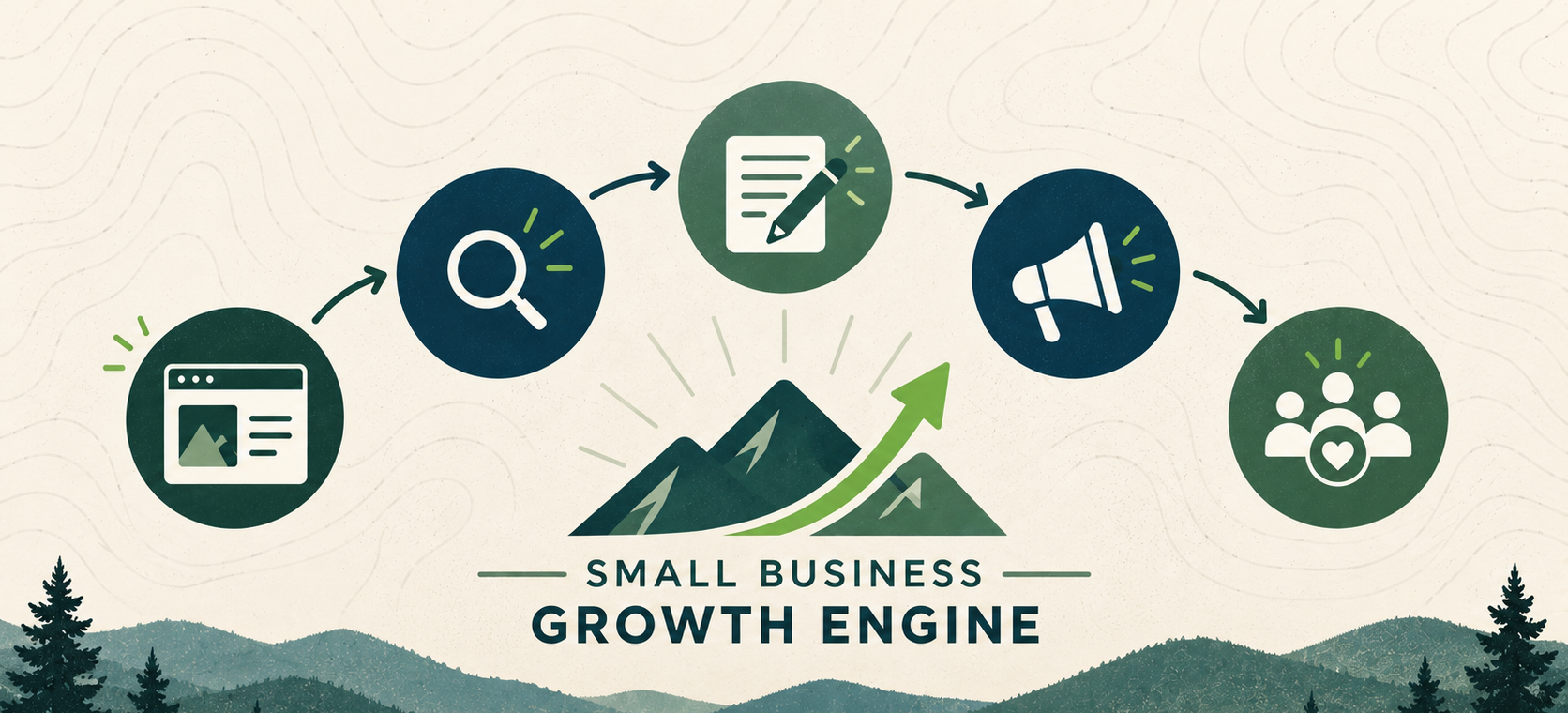
A growth engine is not one platform or one campaign. It is a connected system that helps a business attract the right audience, turn attention into interest, capture opportunities, follow up consistently, and measure what happens next.
At Northeast Kingdom Online, we think about growth in terms of how the pieces work together. A strong website supports search visibility. SEO and content bring in qualified traffic. Advertising extends reach. Forms and calls create leads. CRM and follow-up help move those leads toward real conversations. Measurement shows where the system is working—and where it needs attention.
NEKO currently describes its approach as building results-driven marketing systems, high-performing websites, and complete digital growth solutions designed to connect businesses with the customers they need to grow.
What a Small Business Growth Engine Actually Does
A growth engine creates a clearer path from discovery to customer action.
Instead of asking, “Should we post more?” or “Should we spend more on ads?” the better question is:
Where is the system breaking down?
A business may have excellent visibility but a weak website. Another may have a strong website but little search presence. A third may generate plenty of inquiries but struggle to follow up consistently.
The goal is not to add more marketing for the sake of activity. The goal is to make each part support the next.
A simple version of the growth engine looks like this:
Visibility → Website → Lead → Follow-Up → Customer → Measurement
When those stages are connected, marketing becomes easier to evaluate because each activity has a clear role.
Your Website Is the Hub
Your website is often where the rest of your marketing points.
Search results, social media posts, paid advertising, email campaigns, Google Business Profile activity, and referral traffic all may lead someone back to your site.
That means the website has to do more than look professional.
It should quickly explain what your business does, who you serve, why a customer should trust you, and what they should do next.
A well-designed site can support growth by making important information easy to find, creating clear calls to action, and giving visitors enough confidence to call, request a quote, schedule a consultation, or make a purchase.
NEKO’s current positioning reflects that approach, describing its website services as high-performance websites built to turn visitors into customers and support business growth.
If a business spends money on marketing but sends traffic to a confusing or outdated website, more traffic may simply produce more missed opportunities.
SEO Helps the Right Customers Find You
A strong website is valuable only if the right people can discover it.
Search engine optimization helps search engines understand what your business offers and when your pages may be relevant to someone looking for those products or services.
For local businesses, that can include service pages, local search optimization, Google Business Profile management, helpful content, reviews, and consistent business information.
Search is also evolving. Customers now discover businesses through traditional search results, Maps, local listings, and AI-assisted search experiences.
That does not mean SEO is being replaced. It means businesses need clear, useful information across more parts of their digital presence.
NEKO now positions SEO & AI Optimization together as part of helping businesses get found across search engines and AI search experiences.
Within a growth engine, SEO is not simply about rankings. Its role is to bring relevant people into the next stage of the customer journey.
Content Builds Understanding and Trust
Content gives customers a reason to pay attention before they are ready to buy.
A helpful blog article can answer a question. A social post can introduce a common business problem. A video can demonstrate expertise. A case study can show how a company approaches real-world challenges.
When content works within a larger growth system, it has a clear purpose.
It can support search visibility, educate potential customers, strengthen credibility, and guide people toward the website or another next step.
This is where many businesses get stuck. They create content because they feel they are supposed to post regularly, but the content is not connected to a broader goal.
A stronger approach asks:
What should this piece of content help the customer understand or do next?
That keeps content useful and prevents social media from becoming an isolated activity.
Advertising Can Accelerate a Strong System
Paid advertising can create visibility quickly, but it works best when the rest of the growth engine is ready for the attention.
An ad may reach exactly the right customer. But if that customer clicks through to an unclear landing page, encounters outdated information, or cannot find an easy way to contact the business, the opportunity may disappear.
Advertising should therefore support a clear customer path.
The ad creates interest. The landing page continues the message. The call to action captures the lead. Follow-up moves the conversation forward. Reporting helps the business understand what happened.
NEKO describes its digital marketing and advertising approach as using data-driven strategies to put brands in front of the right people at the right time.
The better the underlying system, the more useful paid traffic can become.
CRM Keeps Opportunities From Getting Lost
Generating a lead is only the beginning.
Someone may submit a website form, call the office, request pricing, schedule a consultation, or ask a question through another channel.
What happens next matters.
A CRM, or customer relationship management system, helps organize those opportunities so the business knows who contacted them, what they were interested in, when someone followed up, and what stage of the relationship they are in.
For a small business, this does not need to become complicated; The purpose is simply to create consistency.
Without a clear process, good leads can sit in an inbox, receive duplicate responses, or disappear because everyone assumed someone else was handling them.
Within a growth engine, CRM connects marketing activity to the sales and customer-service process.
Follow-Up Turns Interest Into Opportunity
Marketing creates attention. Follow-up creates conversation.
A customer who fills out a form is signaling interest, but that interest may have a short lifespan. They may be contacting multiple providers or trying to solve an immediate problem.
A clear follow-up process helps the business respond consistently and gives the customer confidence that someone is paying attention.
That might mean an automated confirmation followed by a personal response. It could mean assigning inquiries to the correct team member or creating reminders so opportunities do not disappear.
The important part is that the process is intentional.
A business can spend significant time and money generating leads while still losing opportunities after the initial inquiry. Improving follow-up may therefore produce more value than simply increasing marketing volume.
Measurement Connects the Entire System
One of the biggest benefits of a connected growth engine is that it becomes easier to understand what is happening.
Instead of looking only at impressions, clicks, followers, or website visits, a business can evaluate how those activities contribute to calls, forms, appointments, qualified leads, and customer relationships.
NEKO’s current process emphasizes learning about business goals, developing a strategy, implementing it, and then measuring what worked to identify actionable opportunities.
That last step is important.
Marketing data should help answer questions such as:
- Where are qualified leads coming from?
- Which pages are helping customers take action?
- Where are prospects dropping out of the process?
- Which campaigns are creating business opportunities?
- What should we improve next?
The point of measurement is not to produce a larger report. It is to make a better decision.
Why Scattered Marketing Often Underperforms
Scattered marketing usually happens gradually.
A business launches a website. Later, someone creates a Facebook page. Then ads are added. A CRM is introduced. SEO gets attention for a few months. Email marketing happens when someone has time.
Each decision may make sense individually, but the result can become a collection of tools and tactics that do not share the same objective.
This makes it harder to see where money and effort are producing value; It can also create inconsistent customer experiences.
An ad may promise one thing while the website says another. The Google Business Profile may contain outdated information. Social media may promote services that are difficult to locate on the site. Leads may arrive through several channels without one follow-up process.
A growth engine brings those activities back under one strategy.
Give Each Marketing Channel a Clear Role
Small businesses do not need to be everywhere—They need to be in the places that make sense for their customers and business model.
Search may be important when customers actively look for a solution. Social media may help build awareness and trust. Paid advertising may reach specific audiences or accelerate demand. Email may help maintain customer relationships.
The mistake is treating every channel as if it should accomplish the same thing.
A stronger strategy gives each channel a role within the customer journey.
That makes it easier to decide where to invest—and easier to stop doing activities that are consuming resources without supporting the larger system.
How to Start Building a Better Growth Engine
You do not need to rebuild everything at once; start by mapping the current customer journey.
Ask how customers usually discover the business, where they go next, how they contact you, what happens after they become a lead, and how you know whether the process worked.
Then look for the weakest connection.
If customers cannot find the business, visibility may be the priority.
If traffic is healthy but inquiries are low, the website or offer may need attention.
If leads arrive but rarely become conversations, follow-up may be the problem.
If you cannot answer where leads are coming from, measurement may be the first gap to fix.
This approach helps businesses prioritize instead of spreading resources across too many disconnected improvements.
Build the System Before You Add More Activity
A stronger marketing strategy does not always begin with another campaign.
Sometimes the greatest opportunity comes from making the pieces you already have work better together.
Your website should support your search strategy. Your content should create useful paths toward your services. Advertising should send the right people to pages designed for action. CRM and follow-up should keep opportunities organized. Reporting should show you what to improve next.
That is the idea behind a Digital Growth Engine.
NEKO helps businesses look at the complete system, identify gaps, and create a more focused plan for growth.
Get Your Free Business Growth Plan to review your online presence, identify opportunities, and determine the next steps that can make the biggest difference for your business.
Growth Engine Frequently Asked Questions
What is a marketing growth engine?
A marketing growth engine is a connected system that helps a business attract potential customers, communicate value, generate leads, follow up consistently, and measure results. It can include a website, SEO, content, advertising, CRM, email, social media, and analytics.
Why isn’t my digital marketing generating leads?
The issue may be somewhere between visibility and action. Your business could be attracting the wrong audience, sending people to an unclear website, using weak calls to action, or losing inquiries after they come in. Reviewing the full customer journey usually reveals where the disconnect is happening.
Does a small business need multiple marketing channels?
Often, yes, but not every channel. Different channels serve different purposes. Search can capture demand, social media can build awareness and trust, advertising can expand reach, and email can support ongoing relationships. The goal is to choose the channels that make sense for your customers and connect them around one strategy.
Where should I start if my marketing feels disconnected?
Start by mapping how customers discover your business, where they go next, how they contact you, what happens after they become a lead, and how you measure results. From there, focus on the weakest connection first instead of trying to fix everything at once.