From Google Maps to AI Search: How Local Businesses Get Found in 2027
Get Found Wherever Customers Search
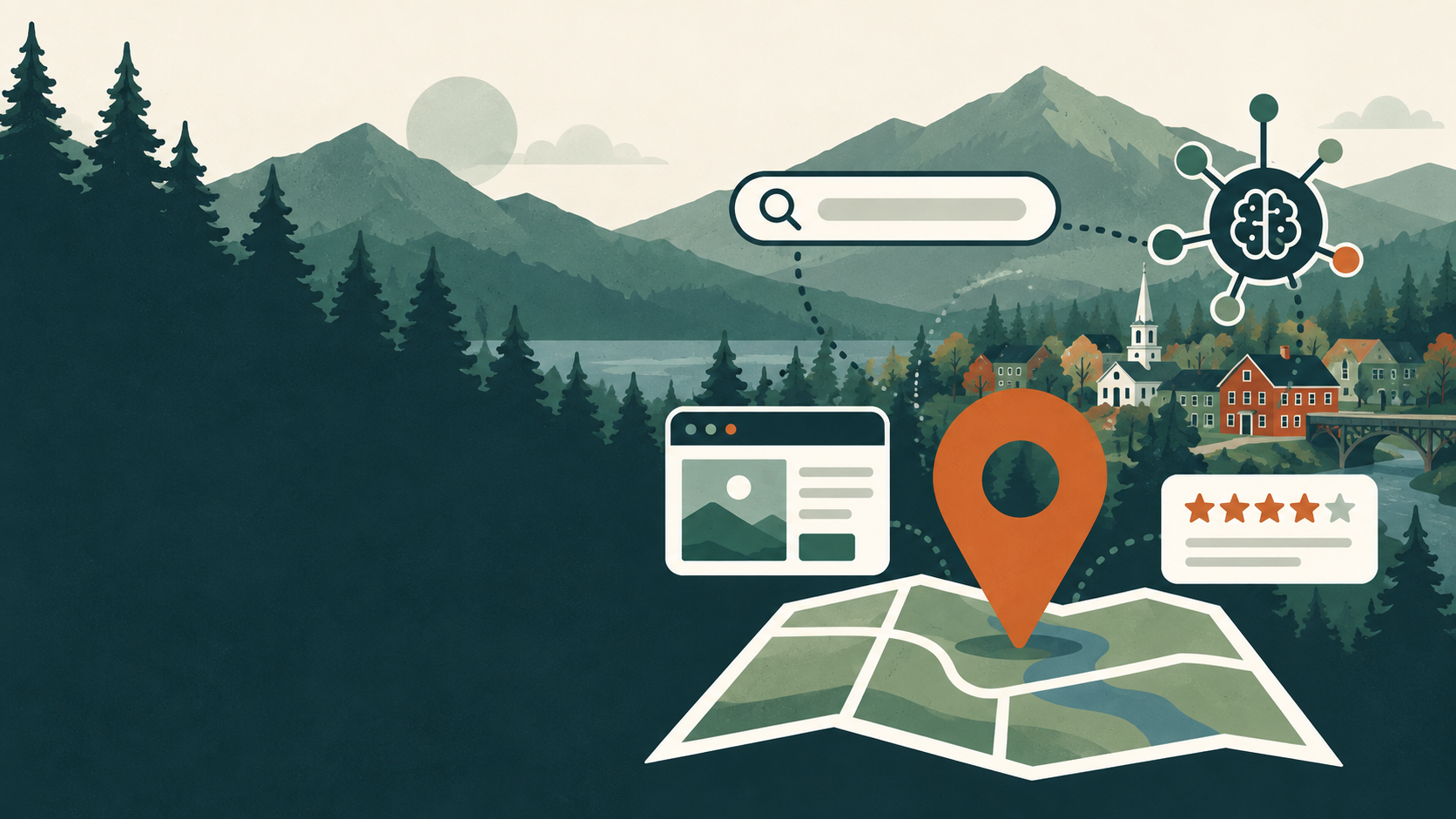
Local search is no longer happening in one place.
A customer may discover your business through Google Maps, a traditional search result, a review, a local directory, your website, or an AI-generated answer. In many cases, they may move between several of those touchpoints before they ever call, visit, or submit a form.
That changes the way local businesses should think about visibility.
The goal is no longer simply to “rank well.” The goal is to make your business easy to find, easy to understand, and easy to trust wherever customers are searching.
For small and mid-sized businesses, that means your website, Google Business Profile, reviews, local listings, content, and search strategy should reinforce one another.
Be Easy to Find—and Easy to Understand
Search engines and AI systems need clear information about your business before they can confidently surface it.
That starts with the basics:
What do you do?
Who do you serve?
Where do you operate?
What makes your business relevant to the search?
Can your information be verified across multiple trusted sources?
When those answers are clear and consistent, your business has a stronger foundation for both traditional local search and newer AI-assisted discovery.
Google Maps Still Matters
For many local searches, Google Maps remains one of the most important places customers encounter a business.
People use Maps to compare nearby options, check hours, read reviews, view photos, get directions, and contact a business quickly.
Google says local results are primarily influenced by relevance, distance, and prominence. Complete business information, reviews, links, and overall web presence can all contribute to how a business appears in local results.
That makes your Google Business Profile a critical part of the customer journey.
A strong profile should include accurate contact information, current hours, correct categories, relevant services, quality photos, a working website link, and consistent review activity.
Your profile should not exist separately from your website. The two should tell the same story.
Your Website Is Still the Source of Truth
Even as search changes, your website remains one of the strongest places to explain your business in depth.
It gives you room to clearly describe services, service areas, expertise, customer questions, and the problems you solve.
This matters because search platforms do not rely on only one source.
Google explains that local listing information can be compiled from business profiles, public web content, third-party sources, user contributions, and other information across the web.
That means your website should support the information customers see elsewhere.
If your Business Profile says one thing, your website says another, and a directory lists outdated information, your digital presence becomes harder to interpret.
Consistency creates clarity.
Reviews Help Build Visibility and Trust
Reviews serve two jobs.
First, they can influence how prominently a local business appears in search.
Second, they help real customers decide whether they feel comfortable taking the next step.
That makes review strategy part of both SEO and conversion.
A strong review profile does not require hundreds of reviews overnight. What matters is building an ongoing process for asking satisfied customers for feedback, responding professionally, and keeping the profile active over time.
Reviews also give search engines and AI systems more context about how customers describe the business.
If customers consistently mention specific services, locations, or experiences, those patterns can reinforce what the business is known for.
Local Listings Need to Tell the Same Story
Your Google Business Profile is important, but it is not the only listing that matters.
Business directories, chamber listings, industry directories, social profiles, map platforms, and local organizations can all contribute to how your business appears online.
The most important details should remain consistent:
- Business name
- Address or service area
- Phone number
- Website
- Hours
- Primary services
- Business category
Inconsistent information creates confusion for customers and weakens the overall clarity of your online presence.
You do not need to chase every directory on the internet. Focus on the places that are relevant, reputable, and likely to be used by your customers.
AI Search Changes the Way Businesses Are Discovered
AI-assisted search is adding another layer to local discovery.
Instead of simply presenting a list of links, AI search experiences may summarize information, compare options, answer questions, and suggest businesses based on the information available across the web.
This is where Answer Engine Optimization, or AEO, becomes useful.
AEO is not about replacing SEO.
It is about making your business information easier to understand in environments where the search experience is increasingly answer-based.
Google's current guidance for generative AI search continues to emphasize that traditional SEO best practices remain relevant.
That means the fundamentals still matter:
- Clear website structure.
- Useful content.
- Accurate business information.
- Relevant local signals.
- Strong service pages.
- Helpful answers to customer questions.
- Consistent information across the web.
The difference is that businesses should now think not only about ranking, but also about whether their information is clear enough to be summarized and referenced accurately.
Write for the Questions Customers Actually Ask
One of the best ways to support both SEO and AEO is to create content around real customer questions.
Instead of publishing broad content simply to “have a blog,” focus on the questions prospects ask before they buy.
For example:
- How much does this service cost?
- Do you serve my town?
- How long does the process take?
- What is included?
- What should I prepare before contacting you?
- How is this different from another option?
When those answers are clear on your website, you create useful content for customers and stronger context for search systems.
This also helps your website become more than a digital brochure; It becomes a source of information.
Service Pages Need Specificity
Generic service pages often create generic visibility.
If a page states “We provide quality service and great customer care,” there is very little for a search engine—or a customer—to understand.
A stronger service page explains:
- What the service is.
- Who it is for.
- What problem it solves.
- Where it is available.
- What the process looks like.
- What customers commonly ask.
- What they should do next.
For local businesses, geography matters too.
If you serve Vermont, the Northeast Kingdom, or specific towns or counties, that should be communicated naturally where relevant.
Avoid creating dozens of nearly identical location pages just to target town names. Useful local content should reflect real service areas and real customer needs.
Your Google Business Profile and Website Should Support Each Other
Think of your Google Business Profile as the front door and your website as the full conversation.
The profile helps someone quickly understand who you are.
The website should give them enough detail to decide whether you are the right fit.
When those two assets are aligned, customers get a more consistent experience.
Check whether your business name, phone number, hours, service descriptions, website links, and location information match.
Then make sure your website gives visitors a clear path to the next step.
Search Visibility Should Connect to Conversion
Being found is only the first step.
A local business can perform well in search and still lose leads if the website is confusing, slow, outdated, or difficult to use on mobile.
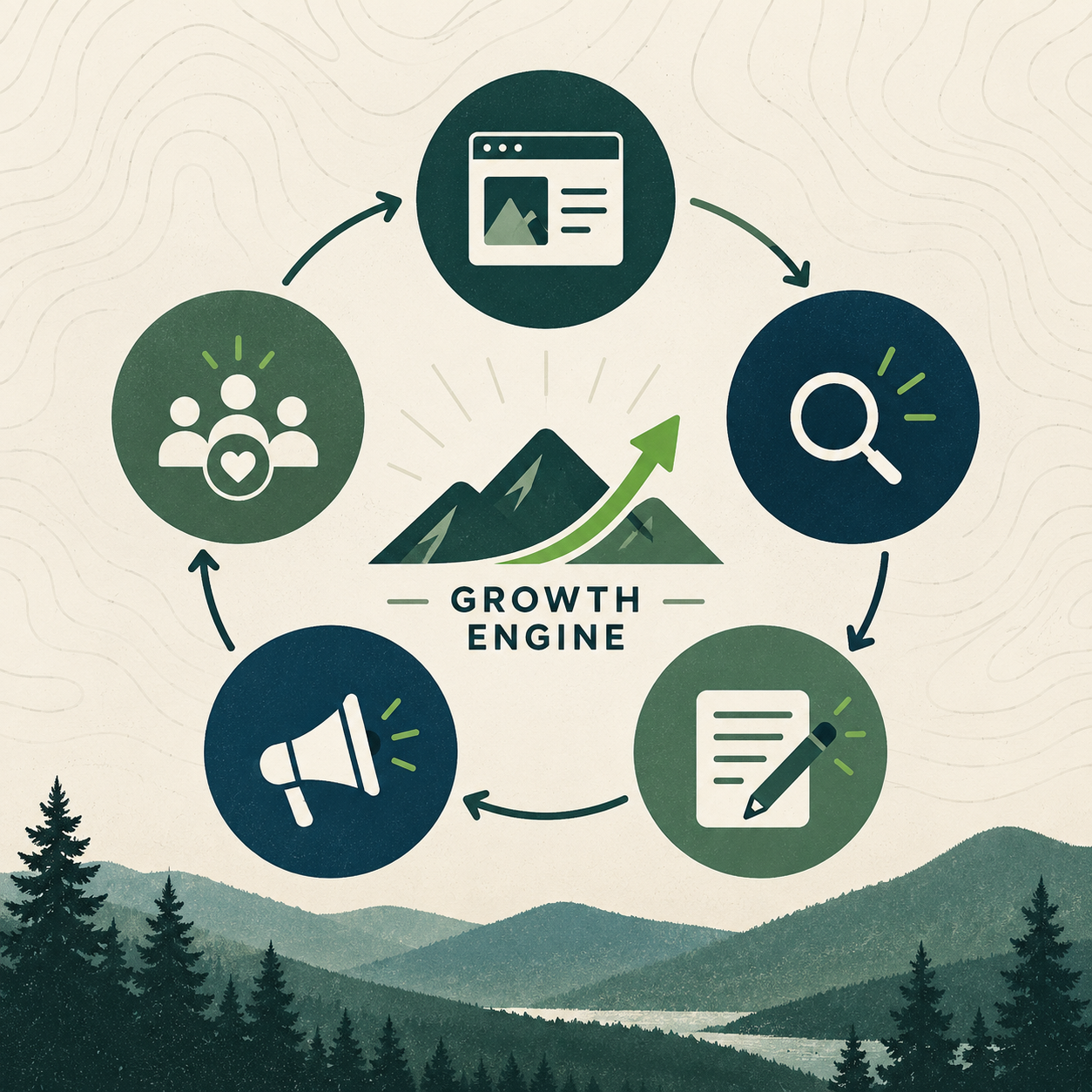
That is why local search should be viewed as part of a larger growth system.
Search creates visibility.
The website creates understanding.
Reviews create trust.
Calls to action create opportunity.
Follow-up creates conversation.
When those pieces are connected, search visibility becomes much more valuable.
What Local Businesses Should Prioritize Before 2027
You do not need to overhaul your entire digital presence.
Start by making sure the fundamentals are strong:
- Review your Google Business Profile.
- Check your core business information across the web.
- Make sure your website clearly explains your services.
- Improve service and location content where needed.
- Build a consistent review process.
- Answer common customer questions.
- Track calls, forms, and other meaningful actions.
Then look at how those pieces work together.
The goal is not to optimize for one platform.
The goal is to build a digital presence that makes your business easier to understand wherever a customer finds you.
Build a Search Presence That Works Everywhere
The future of local search is not about choosing between Google Maps, traditional SEO, or AI search.
It is about creating a digital presence that works across all of them.
Your business should be easy to find, easy to understand, and easy to trust—whether someone discovers you through Maps, a search result, a review, a directory, or an AI-generated answer.
That requires more than one tactic.
It requires a connected strategy.
Make Your Digital Growth Plan
NEKO can help you evaluate your website, Google Business Profile, local search visibility, content, SEO, and AEO strategy to identify where your digital presence can become stronger.
Get your Free Business Growth Plan or schedule an
SEO & AEO consultation to find gaps, prioritize the next steps, and build a clearer path toward growth.
Frequently Asked Questions
How are customers finding local businesses online today?
Customers may discover businesses through Google Search, Google Maps, reviews, local directories, websites, social platforms, and AI-assisted search experiences.
Can AI search recommend my local business?
Yes, potentially. AI-assisted search can surface local businesses when there is enough clear, trustworthy information online about what the business does, where it operates, and why it is relevant to the search.
Does my Google Business Profile affect AI search visibility?
It can contribute to how search platforms understand your business, especially when your profile information aligns with your website, reviews, and other trusted online sources.
What information should be consistent online?
Your business name, address or service area, phone number, website, hours, categories, and core service information should stay consistent across your website, Google Business Profile, and relevant listings.
Is AEO replacing SEO?
No. AEO and SEO should work together. SEO helps search engines discover and understand your content, while AEO helps make that information clearer for answer-based and AI-assisted search experiences.
How can I improve my chances of appearing in AI search results?
Focus on clear service information, accurate local details, useful website content, strong FAQs, trustworthy reviews, and consistent information across the web. There is no guaranteed way to appear in an AI-generated answer, but these fundamentals create a stronger foundation.
Do reviews help local search visibility?
Reviews can support both trust and local visibility. They also give search platforms more context about customer experiences, services, and how people describe the business.
How do I know if my local SEO strategy is working?
Look beyond rankings. Track calls, website visits, direction requests, form submissions, booked appointments, and qualified leads to see whether local search is producing meaningful business activity.