Reasons Your Local Business Listings Need to Be Accurate
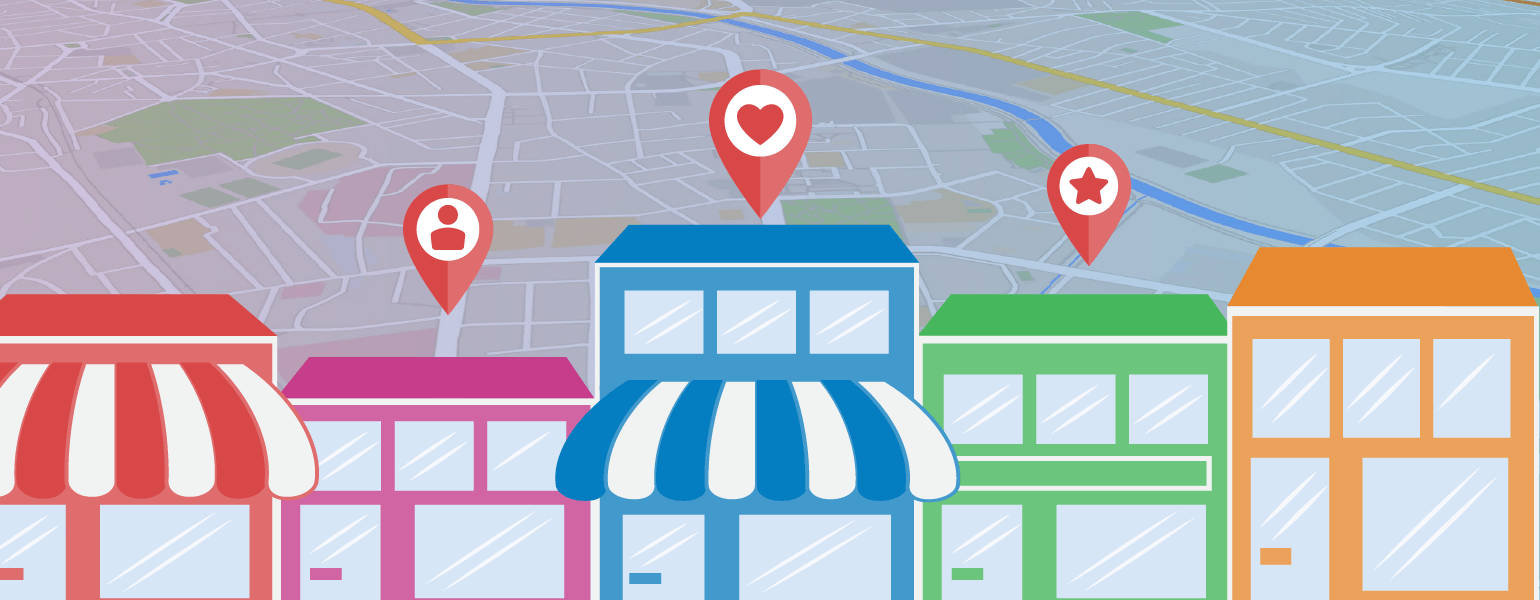
As a business, how likely is it that potential customers will come through your door?
The whole point of an online presence is to entice customers into your store, your leasing office or your showroom so you can convert them to paying customers rather than just browsers online.
Further, nothing is more frustrating as a customer than finding out that you have been given the wrong information about where a business is located. As a customer, how likely are you to give this company your business? Not very. In fact, according to Placeable, 73% of consumers stated that they lose trust in a brand when the online listing shows incorrect information.
1. Missing hours of operation information can be a dealbreaker
There are many things that people look for in listings, whether they are looking at that search engine on a PC or on a mobile device. The top piece of information that most people look for is the hours of operation, since their search is likely for a business that they frequent quite often.
In fact, in a study conducted by local data aggregator Localeze, hours of operation were noted as the most helpful feature in selecting a business during local search. 76% of respondent reporting that they expect this information when searching and 61% believe that it is a feature that helps them to select a business.
Even if people are new to a business, it doesn’t give people a good impression if the business hours are not listed and they don’t know that it’s only open from 11 a.m-6p.m. Tuesday-Saturday .Imagine that potential customer who is ready to spend their money in store, but shows up on Monday at 7 p.m. only to find it closed. That customer is likely going to do another search on a mobile phone to find a different store and spend their money there.
2.You can’t spell NAP data (and score a citation) without an A(ddress)
While most people would assume that the number one reason people do a search online is for the address or location of a business, the address is actually behind hours of operation as the second most desired information. But, of course, the whole point of being in business is to make money doing what you love or selling what you love. And that happens by attracting foot traffic and increasing customer base.
It bears repeating that if a business address is incorrect on listing sites such as Google or Bing, then customers will not be crossing the threshold. A simple thing such as the wrong number on a street address, or even the wrong town, can mean that a customer cannot find you. The US Postal Service relies on a complex system of checks to verify and standardize addresses, and many of the search engines will default to the USPS for correct mailing addresses.
What this means for the average new business owner is that unless a business is in an established location, getting the correct address on their listing means that both the address from City Hall and the information on USPS must be consistent. If USPS doesn’t recognize that address, then a business owner must contact them to verify their new address and get that information updated on USPS’s online database.
3. Local searchers are mobile creatures
According to Localeze, mobile-phone-based searches drive in-store purchases with more than 75% of searches ending in a purchase—if a business has their listing details correct. Now if half of the people searching for a business listing on a local search engine, such as Google Local/Maps, can’t find the store’s business listing details, then the business is going to lose 100% of their business.
For ease of use for potential customers, some of those details need to be as readily available as possible in a mobile-friendly manner. This can be accomplished with a responsive website that supports cellphone and tablet-specific versions.
4. Updated, accurate websites still serve as a first impression
At the same time, more than 60% of searches on PC platforms such as website portals, Internet Yellow Page directories and local sites have a similar chance of ending in a purchase. While mobile searches are becoming more of a standard in where a customer searches, a business owner should not discount the power of a fulsome, consistent and accurate listing that is reflective of the business website.
Any listing should be linked to the business’s website and feature the exact same information, but more of it. While a website should be enough to entice a customer to visit or buy, if those inconsistencies exist, then trust issues may arise in a business’s practices before a customer ever crosses their threshold.
5. Local searchers mix it up across multiple devices, situations and times
People who search for listings are doing it in many more ways than when the Internet first coalesced into existence about two decades ago. In that time, we went from working on desktops to laptops to PDAs to Blackberries to Apples to tablets—and in each iteration, the methods of search have changed.
However, that has slowed over the last five years or so as web developers realize that they need to be smarter. Rather than designing three different sites for three different platforms, they have created websites that are scalable to the search device. And that has been helped along by the proliferation of types of devices in use everyday.
According to Pew Research Center, In 2015, smartphone ownership in America was at 68%, with tablet and computer ownership at 45%. Statista says that almost half of American adults use their smartphones the most to search for local information online, the other half being split between computers (40%) and tablets (11%). According to Localeze, like the types of devices used, what we are searching for varies by the time of day and device. Entertainment is searched for during work hours on computers, restaurants during evening using phones and health/fitness evening using tablets.
The most important part of those mobile searches is accuracy. If someone cannot find your business in a local search or find inaccurate results whilst out and about, then your business has lost the chance for that browser to become a customer. So having those listings correct in all of the device formats is a must as we, and our technology, continue to evolve in the way we interact with local businesses.
6. Local search results are trusted sources of information
Last but certainly not least is the fact that local search results are considered the most trustworthy. In a study by Neustar, it was determined that these searches, such as “used games Raleigh”, are what people do the most since they put that trust in local business more than big box, big website stores.
Think about it, would you rather find a local store where you can get that latest purse in town right now? Or you can wait a week for delivery, which is four days past the event that you want it for! Local searches lend themselves to instant gratification and that interaction between browser and salesperson will convert that browser from someone who might get just the minimum to a loyal customer who feels like a million having spent a little more, but getting what they consider to be gold!
Those interactions are what lead people to local searches and the absolute necessity of getting your listings correct. Trust leads to loyalty, which leads to more business, which leads to happy customers and business owners.
And it all starts with that correct listing in that customer’s local search.
The most comprehensive business listing solution for local businesses.
Establish accurate listings and appear in more places across the web. Packed with four powerful presence management tools - Google Insights, Listing Sync, Listing Distribution and My Listing - Listing Builder is the most comprehensive business listing solution on the market.
Get in touch with NEKO today for your free demo of NEKO Location Management!
Call us at 1-802-473-1887
Email us at sales@northeastkingdomonline.com
Learn how Vermont businesses can use websites, SEO, content, reviews, and digital marketing to grow online while staying true to their local roots.

Learn how local businesses can use websites, SEO, content, and social media to reach more customers without losing what makes their brand unique.
Learn how an optimized Google Business Profile improves local visibility, builds customer trust, supports SEO, and helps turn searches into calls and visits.

Explore practical back-to-school marketing ideas that help local businesses attract families, promote seasonal services, and build momentum for fall.
Prepare your Vermont business website for foliage season with practical updates that improve visibility, mobile usability, bookings, calls, and sales.
Use this 2026 local SEO checklist to strengthen your Vermont business’s Google visibility, listings, reviews, website content, and lead generation.

Use this small business digital marketing checklist to review your website, search visibility, social media, reviews, lead tracking, and follow-up system from NEKO.
Learn what AEO is, why it matters for Vermont businesses, and how FAQs, clear service pages, and helpful answers support local search visibility.

Learn how small businesses can turn online visibility into real leads with a clear website, helpful content, reviews, lead tracking, and follow-up.

Learn how CRM helps small businesses manage inquiries, track lead sources, improve follow-up, and build stronger customer relationships. | Northeast Kingdom Online