More Traffic Isn’t the Goal: How to Turn Marketing Leads Into Customers
Turn Attention Into Revenue

More traffic can feel like progress.
More website visits. More clicks. More impressions. More form fills.
But if those numbers aren't turning into real conversations, qualified opportunities, and customers, the marketing system isn't doing enough.
The real goal is not simply to attract more attention. It is to create a clear path from interest to action to follow-up to revenue.
For small and mid-sized businesses, that usually means looking beyond one campaign or one platform. Website conversion, lead capture, CRM organization, timely follow-up, qualified advertising, and measurement all need to support one another.
Traffic Is Only the Beginning
A visitor is not automatically a lead, and a lead is not automatically a customer.
That gap is where many businesses lose opportunities.
Someone may click an ad, visit the website, read a service page, and leave without taking action. Another person may submit a form but never hear back quickly enough. A third may become a strong lead, but the business has no clear process for tracking the conversation.
Each stage matters.
A simple path looks like this:
Traffic → Lead → Follow-Up → Conversation → Customer
If one stage is weak, increasing traffic may create more activity at the top without improving results at the bottom.
Your Website Has to Convert Attention Into Action
Once someone reaches your website, the next step should be clear.
Visitors should quickly understand what you offer, who you serve, why your business is a good fit, and what they should do next.
Strong conversion does not require aggressive sales tactics. It requires clarity.
That means clear messaging, simple navigation, visible calls to action, useful service information, strong trust signals, and a mobile experience that makes it easy to call, request information, or book.
If the website is confusing, vague, or difficult to use, more traffic may not solve the problem.
Lead Capture Should Be Simple
A lead form should make it easy for someone to reach out.
Forms that ask for too much information too early can create unnecessary friction. On the other hand, forms that collect too little may make it harder to qualify and respond effectively.
The right balance depends on the business, but the goal is the same: collect enough information to move the conversation forward without making the process feel like work.
Other lead-capture points may include phone calls, appointment requests, quote requests, chat, downloadable resources, or direct messages.
What matters is that each lead has a clear destination.
CRM Keeps Leads Organized
Once leads start coming in, organization becomes important.
A CRM helps track who contacted the business, what they were interested in, when they were contacted, and what happens next.
For a small business, this does not need to be complicated.
The real value of a CRM is consistency.
It helps prevent leads from getting lost in inboxes, forgotten after the first reply, or handled differently depending on who sees the request first.
A simple, organized process can make a major difference in how many opportunities move forward.
Follow-Up Speed Matters
A strong lead can lose momentum quickly.
If someone contacts your business, they are often actively looking for a solution. Slow or inconsistent follow-up gives that opportunity time to cool off or move to a competitor.
That does not mean every inquiry needs an instant sales call.
It does mean the business should have a clear process for what happens next.
A useful process may include an automated confirmation, assignment to the right team member, a personal response, and a reminder for the next follow-up.
The goal is to make sure interest does not disappear simply because the process is unclear.
Qualified Advertising Is Better Than More Advertising
More ad spend does not automatically produce better leads.
Strong advertising focuses on reaching the right audience with the right message and sending that traffic to the right destination.
That means thinking about intent.
Someone actively searching for a service may be closer to taking action than someone who simply saw a broad awareness ad.
The better the match between audience, message, offer, and landing page, the better chance the traffic has of becoming meaningful.
Advertising should support the rest of the growth system, not operate separately from it.
Measurement Should Follow the Customer Journey
Marketing reports often focus heavily on visibility metrics.
Those numbers are useful, but they do not tell the full story.
A stronger measurement approach connects top-of-funnel activity to real business outcomes.
That can include:
- Website visits
- Form submissions
- Phone calls
- Appointment requests
- Qualified leads
- Sales opportunities
- Closed customers
The goal is not to eliminate awareness metrics; it is to understand what happens after awareness.
If one campaign creates fewer clicks but better leads, that may be more valuable than a campaign with high traffic and weak conversion.
Look for the Biggest Leak
When marketing is underperforming, businesses often assume they need more traffic.
Sometimes they do.
But the bigger opportunity may be somewhere else in the process.
If traffic is low, visibility may be the issue.
If traffic is strong but leads are weak, review the website and offer.
If leads are coming in but few become conversations, review follow-up.
If conversations happen but you cannot tell which marketing efforts created them, improve tracking.
The best next step depends on where the system is breaking down.
Build the Whole Path, Not Just the Top
A healthy growth system does not stop when someone clicks.
It connects marketing activity to what happens next.
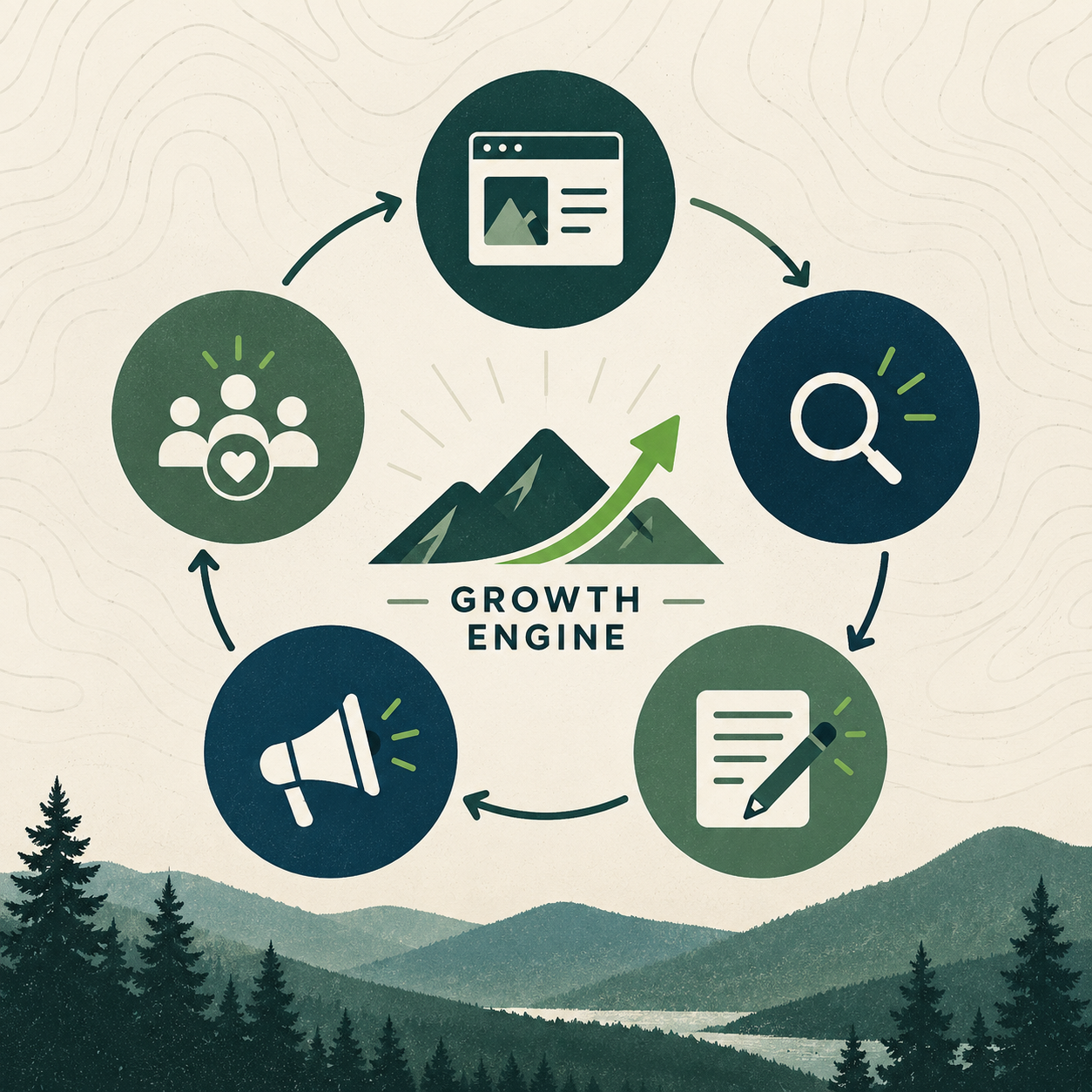
That means your website should support conversion. Lead capture should be easy. CRM should keep opportunities organized. Follow-up should be consistent. Advertising should attract qualified interest. Measurement should show what is producing results.
When those pieces work together, marketing becomes easier to evaluate and easier to improve.
Map Your Business Growth Plan
If your marketing is generating activity but not enough business opportunity, the answer may not be more traffic.
It may be a better-connected system.
NEKO can help you review how your website, advertising, lead capture, CRM, follow-up, and reporting work together—and identify your biggest opportunities.
Map Your Business Growth Plan to find the gaps and prioritize the next steps that can make the biggest difference.
Frequently Asked Questions
Why am I getting website traffic but not enough leads?
The problem may be website conversion, unclear messaging, weak calls to action, poor targeting, or a mismatch between what the visitor expected and what they found. Review what happens after the click, not just how many clicks you are getting.
What is the difference between a lead and a qualified lead?
A lead is someone who has shown interest. A qualified lead is someone who appears to be a realistic fit based on factors like need, budget, timing, location, or service match.
Good marketing should aim for more qualified opportunities, not just more names in a database.
Does a small business need a CRM?
Not always, but many businesses benefit from one once leads are coming through multiple channels. A CRM can help organize inquiries, track follow-up, and make the sales process more consistent.
How quickly should I follow up with a new lead?
As quickly as your team can, consistently and professionally. The key is to avoid leaving interested prospects waiting without acknowledgment or a clear next step.
What marketing metrics matter most?
Focus on the metrics that connect to business outcomes. Traffic, impressions, and clicks are useful, but calls, form submissions, appointments, qualified leads, and customer acquisition usually matter more.
How do I know where my lead process is breaking down?
Map the full journey from first contact to customer. Look at where people stop moving forward. That may reveal whether the issue is visibility, conversion, follow-up, qualification, or tracking.